The best hiking routes in Europaschutzgebiet Verwall
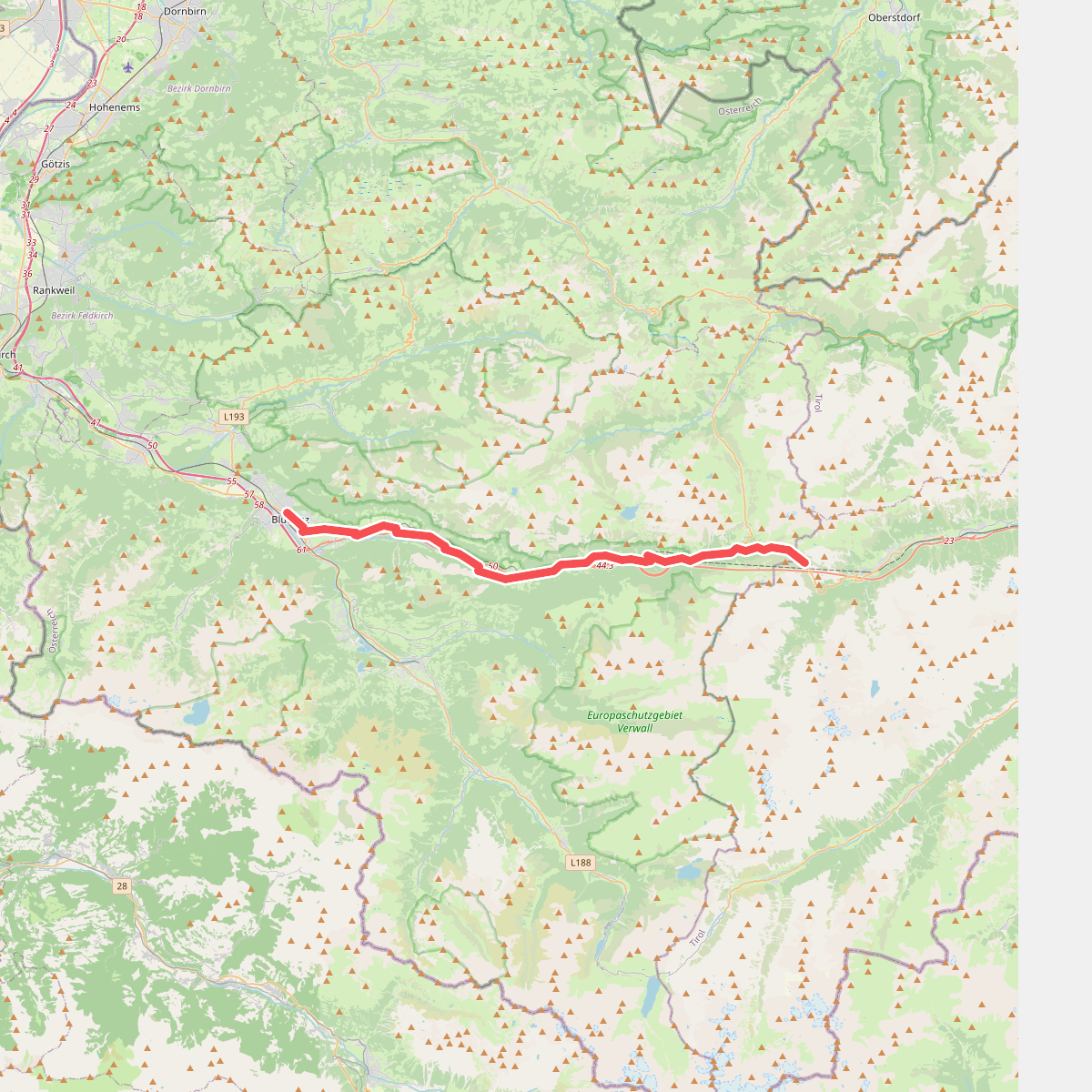
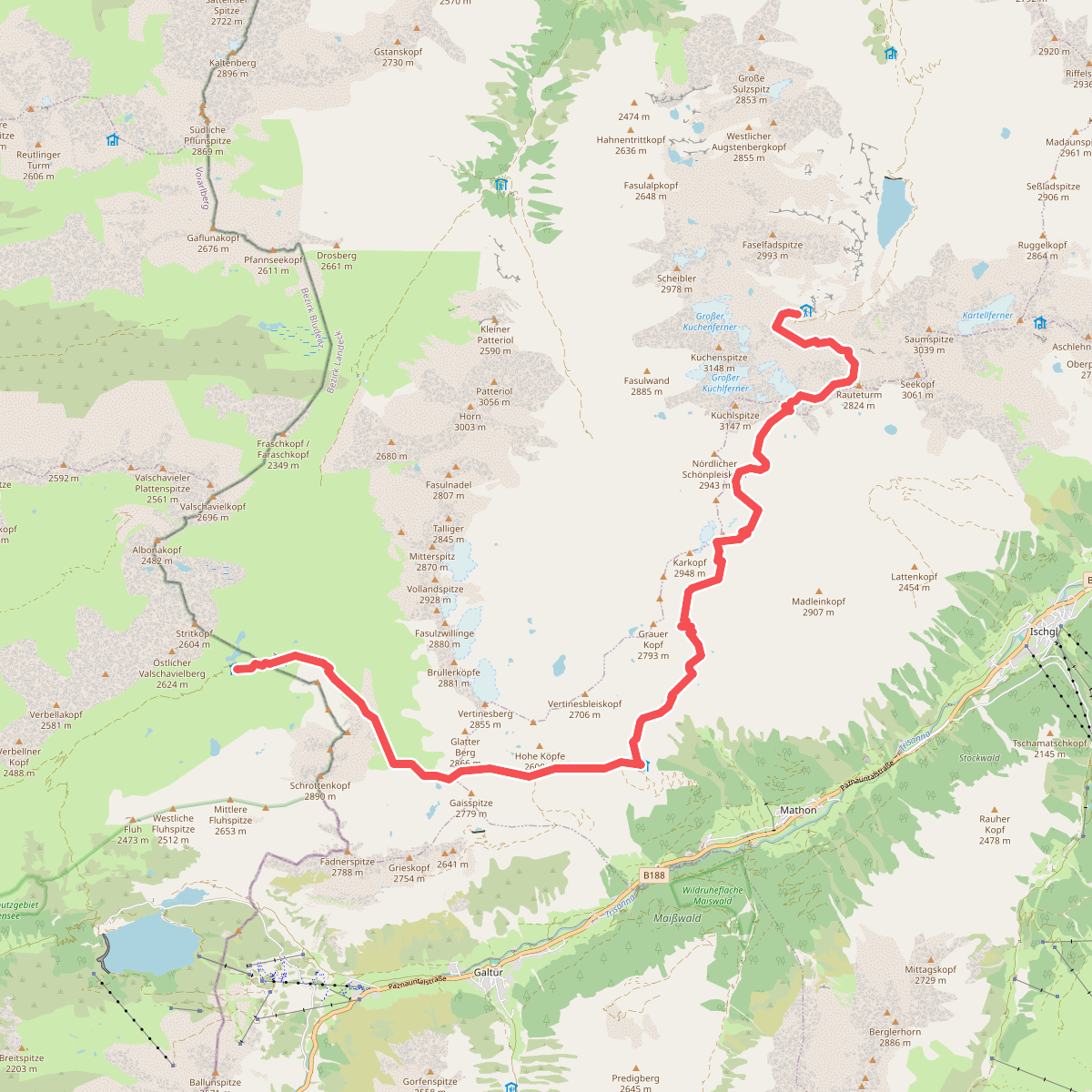
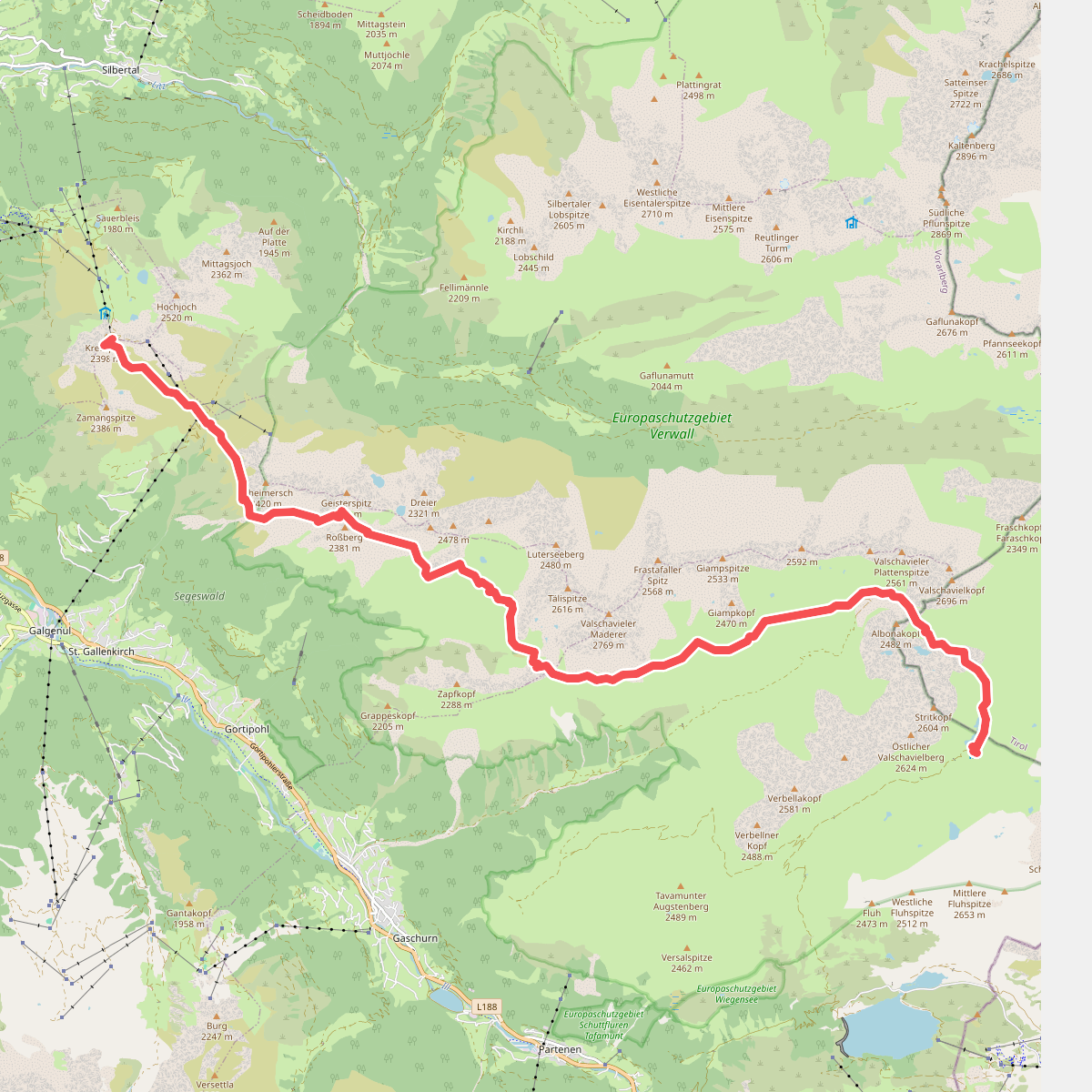
Discover the best walks in Europaschutzgebiet Verwall. 3 routes on the map, with descriptions, photos and GPX.
About Europaschutzgebiet Verwall
Europaschutzgebiet Verwall offers a rugged, high-alpine walking experience characterized by vast expanse of dwarf-shrub heaths, active moors, and scree slopes. Unlike lower, gentler alpine pastures, this protected area is dominated by crystalline rock formations, which give the landscape a dark, craggy appearance. Walkers will notice a distinct transition from subalpine spruce forests at the valley entry points to open, wind-exposed alpine grasslands and boulder fields as they ascend. Underfoot, the terrain consists primarily of narrow, rocky mountain paths, loose scree, and occasional wet peat sections where wooden planks or stepping stones help cross the boggy ground.
Read more
About Europaschutzgebiet Verwall
Europaschutzgebiet Verwall offers a rugged, high-alpine walking experience characterized by vast expanse of dwarf-shrub heaths, active moors, and scree slopes. Unlike lower, gentler alpine pastures, this protected area is dominated by crystalline rock formations, which give the landscape a dark, craggy appearance. Walkers will notice a distinct transition from subalpine spruce forests at the valley entry points to open, wind-exposed alpine grasslands and boulder fields as they ascend. Underfoot, the terrain consists primarily of narrow, rocky mountain paths, loose scree, and occasional wet peat sections where wooden planks or stepping stones help cross the boggy ground.
Read moreEuropaschutzgebiet Verwall offers a rugged, high-alpine walking experience characterized by vast expanse of dwarf-shrub heaths, active moors, and scree slopes. Unlike lower, gentler alpine pastures, this protected area is dominated by crystalline rock formations, which give the landscape a dark, craggy appearance. Walkers will notice a distinct transition from subalpine spruce forests at the valley entry points to open, wind-exposed alpine grasslands and boulder fields as they ascend. Underfoot, the terrain consists primarily of narrow, rocky mountain paths, loose scree, and occasional wet peat sections where wooden planks or stepping stones help cross the boggy ground.
The landscape is shaped by its high elevation and glacial history, visible in the deep cirques and clear mountain tarns that sit in rocky hollows. You will not find manicured parklands or extensive tourist infrastructure here; the focus is on raw, high-altitude terrain. Vegetation is low-lying and adapted to the short growing season, with alpine rose scrub dominating the slopes below the tree line and hardy lichens clinging to the bare rock higher up.
While the main valley trails and routes near the mountain huts see regular foot traffic, the higher passes and off-peak trails offer a much more solitary experience. Walkers should expect steep climbs and uneven, natural ground rather than smooth gravel paths. This area is best suited for those who prefer stark, rocky environments and are comfortable navigating steep, high-mountain terrain.