

The best hiking routes in Forstenrieder Park
Discover the best walks in Forstenrieder Park. 3 routes on the map, with descriptions, photos and GPX.
About Forstenrieder Park
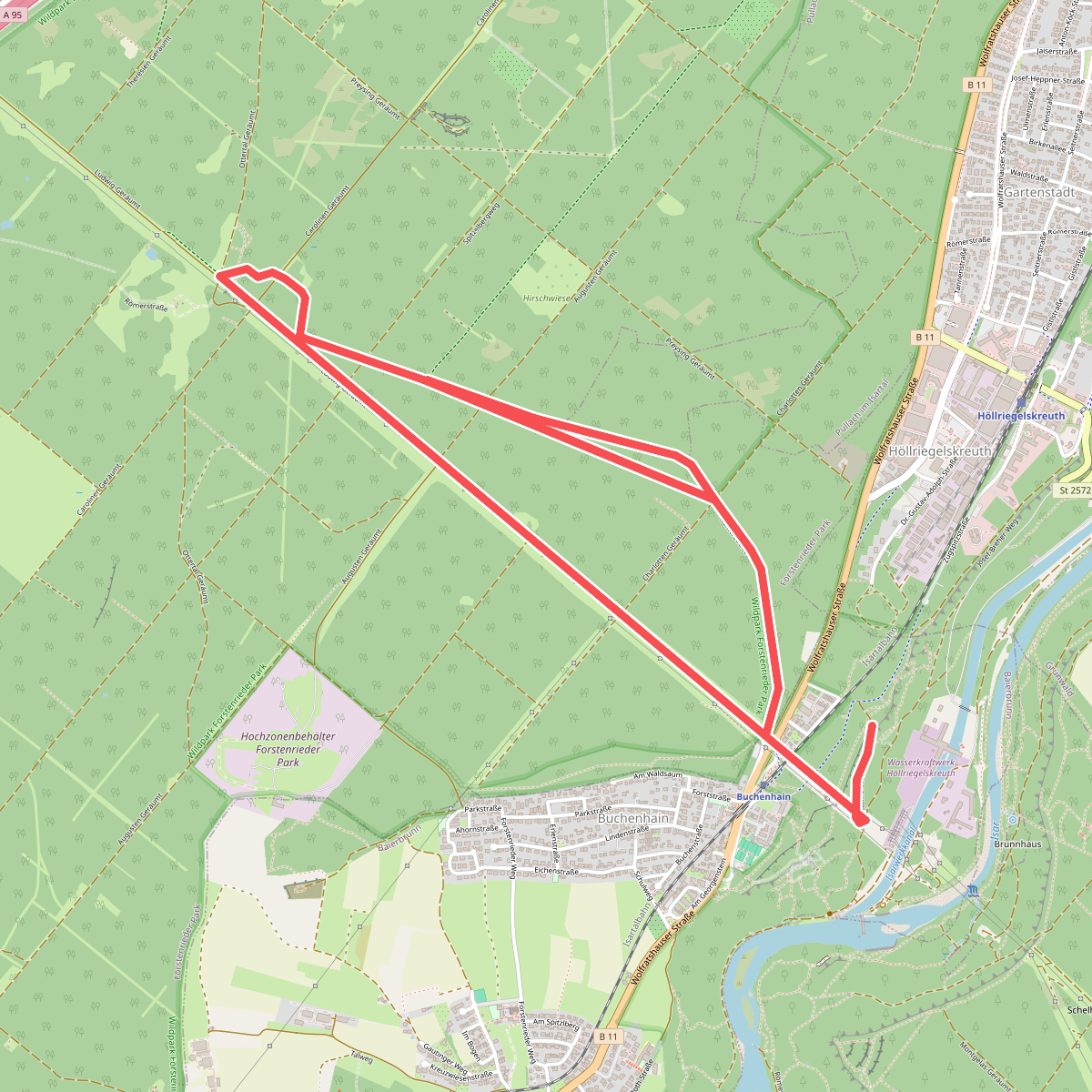
Forstenrieder Park is a vast, flat woodland area lying directly south of Munich. Unlike the nearby alpine foothills, this landscape is characterized by its uniform, gently sloping gravel plain, a legacy of glacial meltwaters. The terrain is dominated by dense spruce plantations, though efforts are underway to introduce more deciduous trees like beech and oak. The park is divided by a network of straight, gravel forestry tracks that meet at right angles, making navigation straightforward but visually repetitive.
Read more
About Forstenrieder Park
Forstenrieder Park is a vast, flat woodland area lying directly south of Munich. Unlike the nearby alpine foothills, this landscape is characterized by its uniform, gently sloping gravel plain, a legacy of glacial meltwaters. The terrain is dominated by dense spruce plantations, though efforts are underway to introduce more deciduous trees like beech and oak. The park is divided by a network of straight, gravel forestry tracks that meet at right angles, making navigation straightforward but visually repetitive.
Read moreForstenrieder Park is a vast, flat woodland area lying directly south of Munich. Unlike the nearby alpine foothills, this landscape is characterized by its uniform, gently sloping gravel plain, a legacy of glacial meltwaters. The terrain is dominated by dense spruce plantations, though efforts are underway to introduce more deciduous trees like beech and oak. The park is divided by a network of straight, gravel forestry tracks that meet at right angles, making navigation straightforward but visually repetitive.
Underfoot, walkers will find wide, hard-packed gravel roads and some narrower dirt paths. The northern section is open to the public, while a large southern portion is enclosed as a game reserve. In this fenced area, wild boars and red deer roam freely, which requires walkers to stick strictly to the designated paths and keep dogs on leashes. The landscape here feels more enclosed, with wooden viewing platforms offering chances to spot the wildlife.
This park is best suited for those seeking long, flat walks under a thick canopy rather than varied topography or sweeping vistas. While the main thoroughfares can be busy with cyclists, the smaller side paths offer a quieter, more solitary experience. In autumn, particularly October, the changing colors of the beech trees provide a stark contrast to the dark, evergreen spruce blocks.