


The best hiking routes in Monti dei Sette Fratelli
Discover the best walks in Monti dei Sette Fratelli. 5 routes on the map, with descriptions, photos and GPX.
About Monti dei Sette Fratelli
The Monti dei Sette Fratelli nature reserve in southeastern Sardinia offers a rugged, forested landscape dominated by granite outcrops and dense Mediterranean macchia. Unlike the flatter coastal plains nearby, this area is defined by its seven distinct rocky peaks, which rise above a canopy of holm oak, cork oak, and strawberry trees. Walkers will find a terrain shaped by erosion, where massive, rounded granite boulders line the ridges and deep, shaded ravines cut through the hillsides.
Read more
About Monti dei Sette Fratelli
The Monti dei Sette Fratelli nature reserve in southeastern Sardinia offers a rugged, forested landscape dominated by granite outcrops and dense Mediterranean macchia. Unlike the flatter coastal plains nearby, this area is defined by its seven distinct rocky peaks, which rise above a canopy of holm oak, cork oak, and strawberry trees. Walkers will find a terrain shaped by erosion, where massive, rounded granite boulders line the ridges and deep, shaded ravines cut through the hillsides.
Read moreThe Monti dei Sette Fratelli nature reserve in southeastern Sardinia offers a rugged, forested landscape dominated by granite outcrops and dense Mediterranean macchia. Unlike the flatter coastal plains nearby, this area is defined by its seven distinct rocky peaks, which rise above a canopy of holm oak, cork oak, and strawberry trees. Walkers will find a terrain shaped by erosion, where massive, rounded granite boulders line the ridges and deep, shaded ravines cut through the hillsides.
Underfoot, the trails vary from soft, leaf-littered soil beneath the dense forest canopy to gritty, decomposed granite sand on the exposed ridges. The lower valleys feature narrow streams that dry up significantly by July, leaving behind gravelly beds, while the higher paths require navigating uneven stone steps and exposed bedrock. The vegetation changes noticeably with elevation, shifting from thick, aromatic shrubs at the base to sparser, wind-sheared trees near the summits.
This reserve is not a place for wide, manicured gravel paths or gentle parkland strolls. It is a dense, sometimes claustrophobic woodland that opens up to sharp, rocky vantage points. While the main trailheads near the forest station can be busier with visitors looking for Sardinian deer, the steeper, higher paths toward the peaks offer a much quieter, more demanding walking experience.
Hiking routes in Monti dei Sette Fratelli (5)
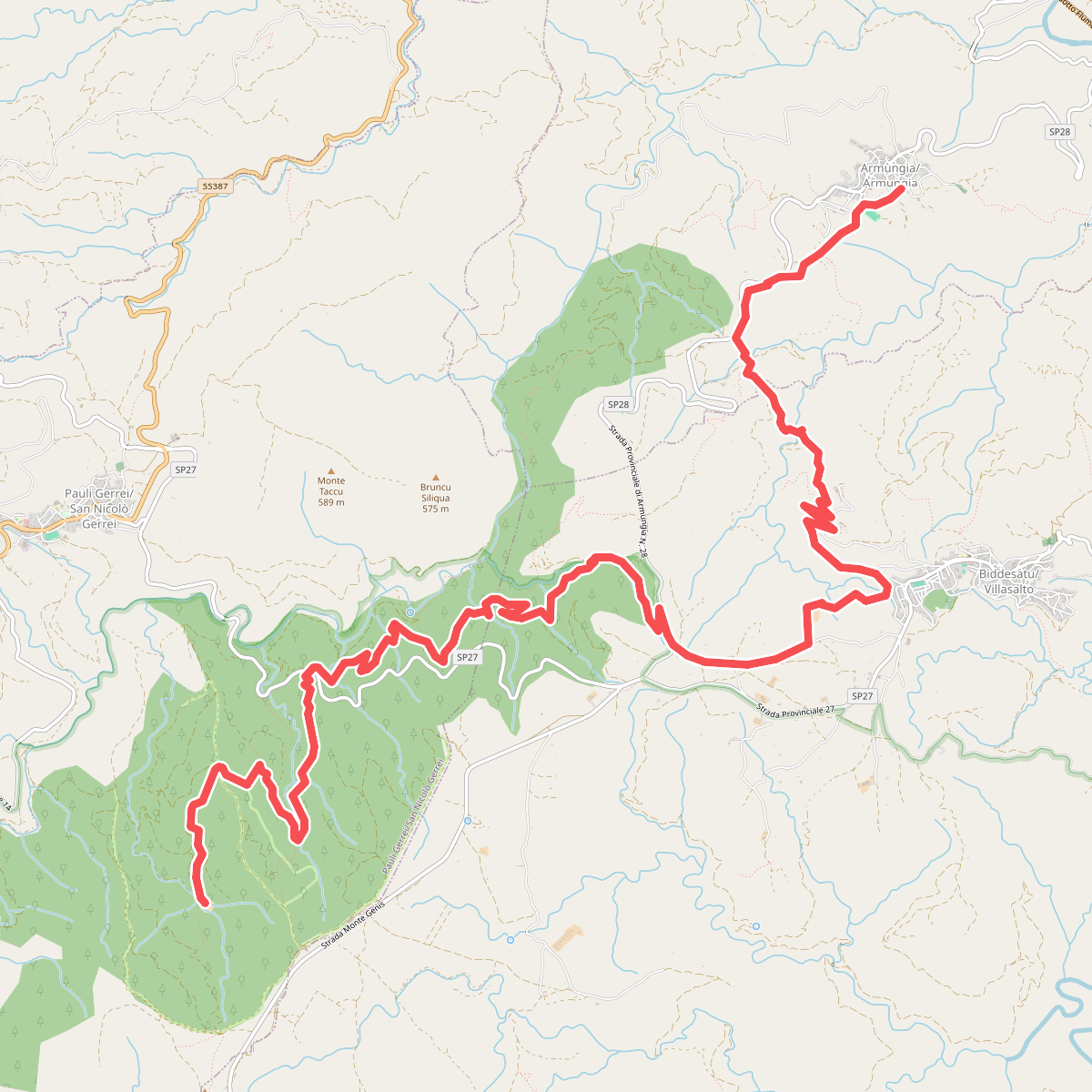
#1. Sentiero Italia - Sardegna Z00 · SI
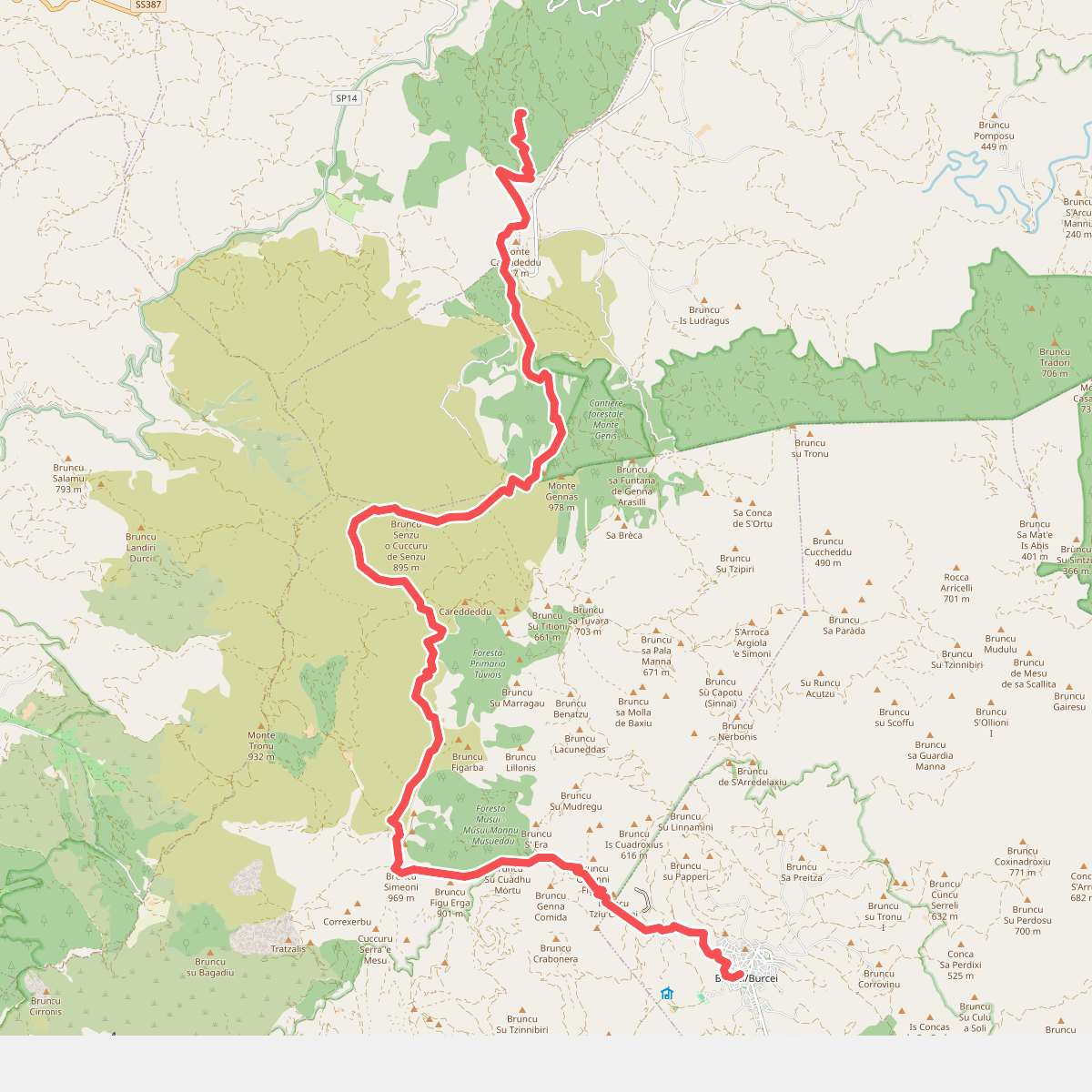
#2. Sentiero Italia - Sardegna Z00 · SI
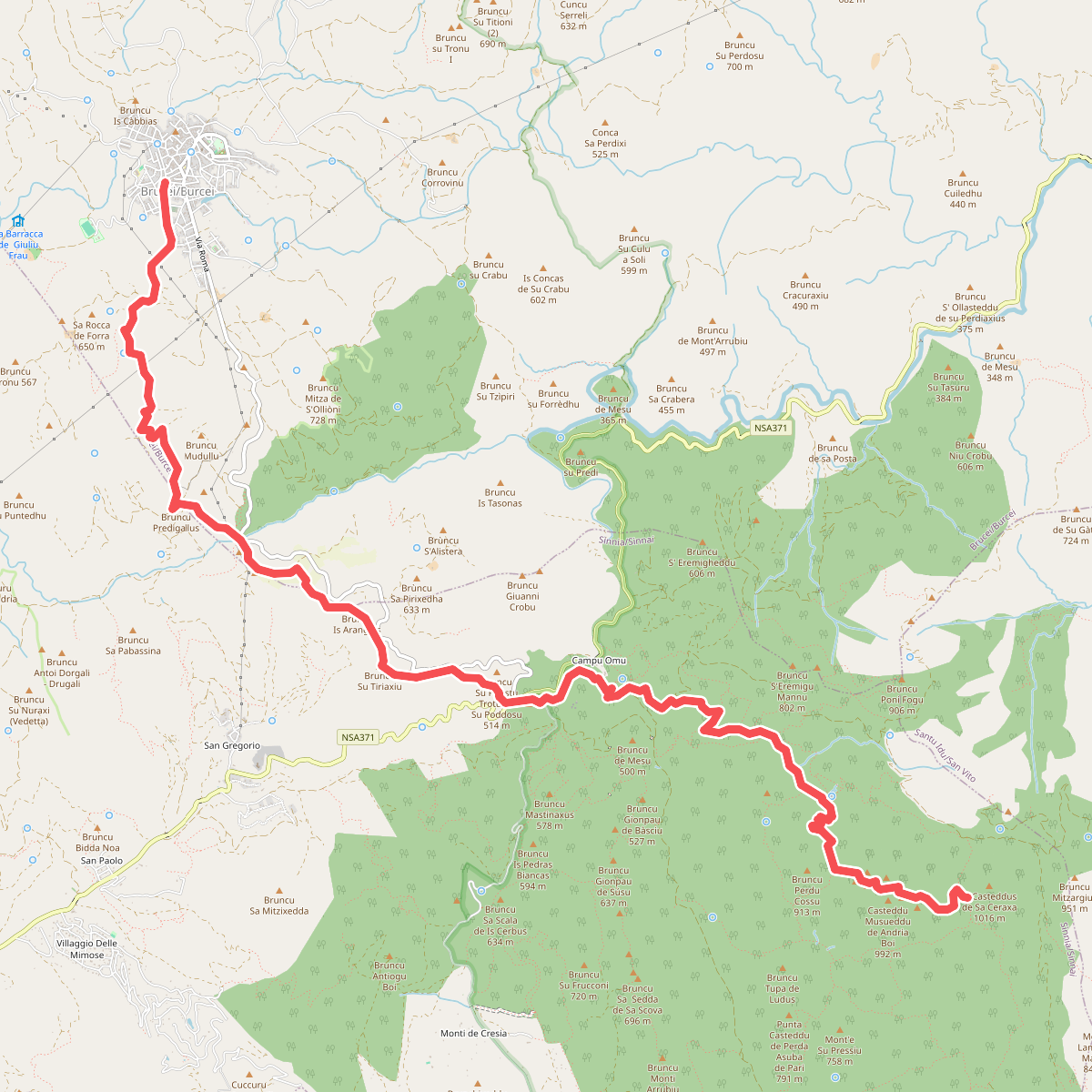
#3. Sentiero Italia - Sardegna Z00 · SI
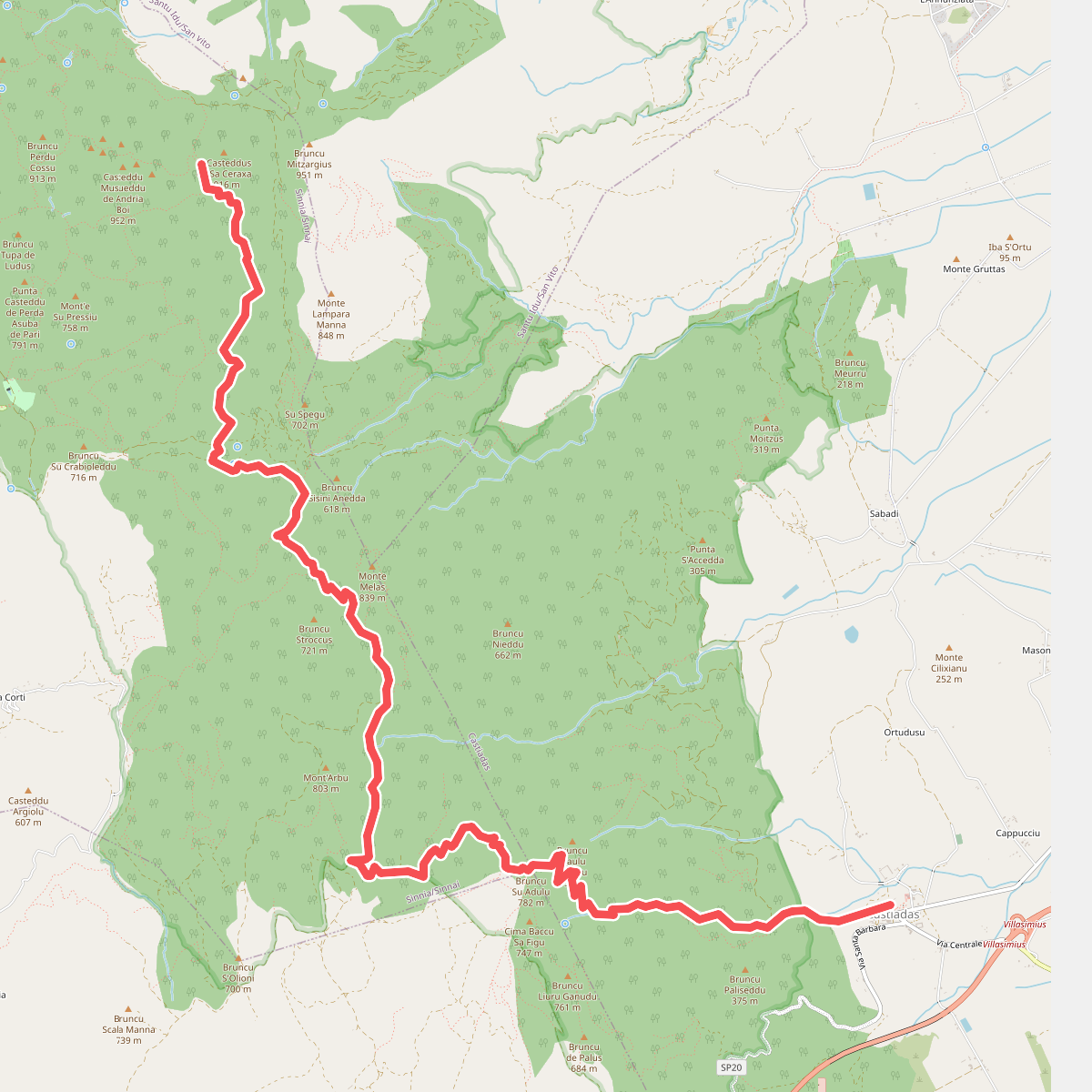
#4. Sentiero Italia - Sardegna Z00 · SI
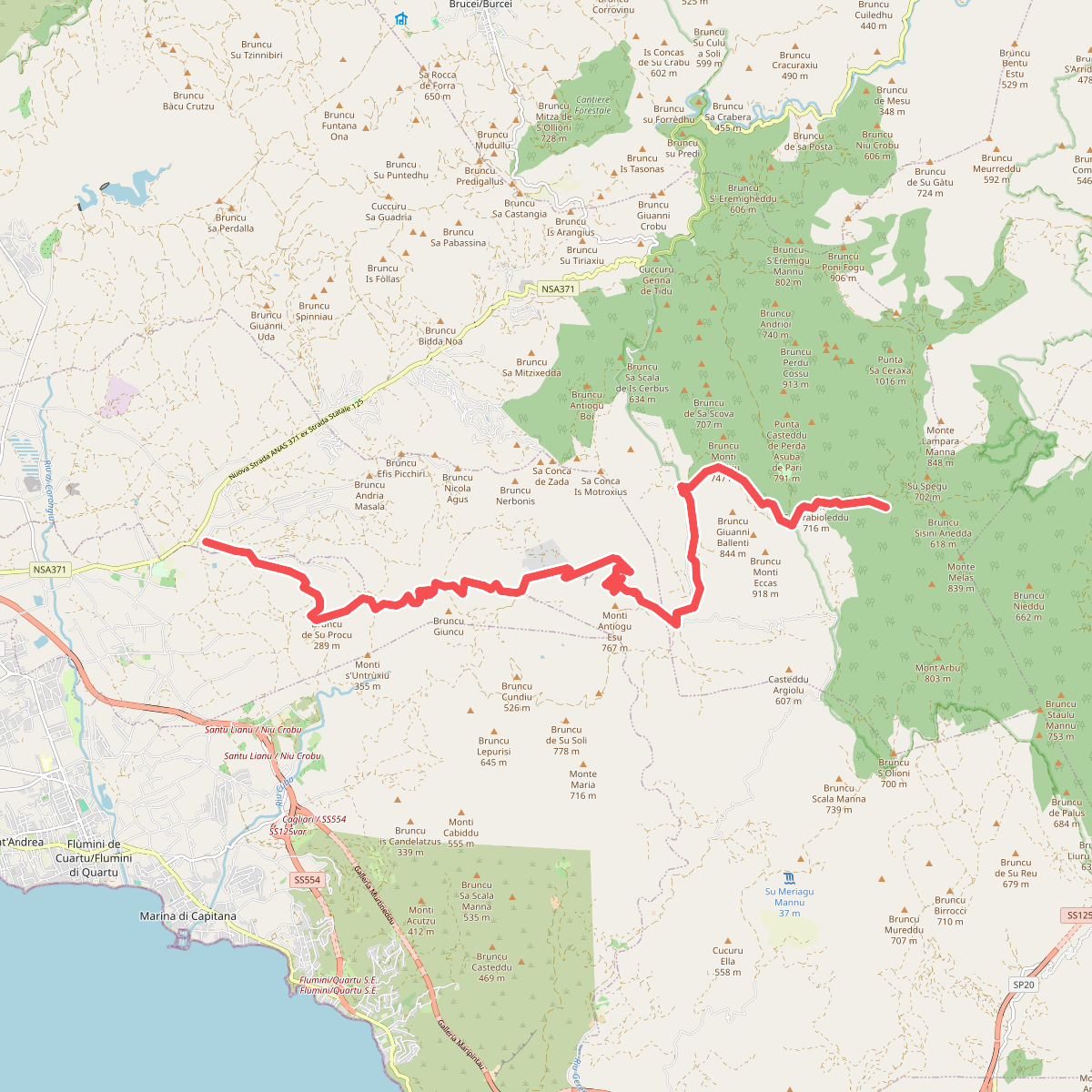
#5. Strada Reale Sa Bia Sarrabesa
Maracalagonis,Quartùcciu/Quartucciu,Sìnnia/Sinnai




