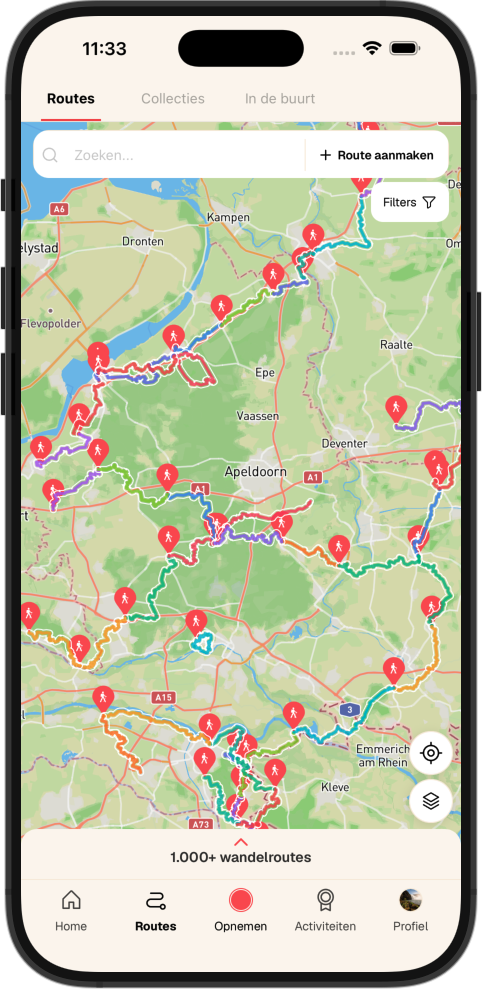


The best hiking routes in Parco Nazionale d'Abruzzo, Lazio e Molise
Discover the best walks in Parco Nazionale d'Abruzzo, Lazio e Molise. 29 routes on the map, with descriptions, photos and GPX.
About Parco Nazionale d'Abruzzo, Lazio e Molise
The Parco Nazionale d'Abruzzo, Lazio e Molise is defined by its ancient, weathered limestone mountains and vast beech forests rather than jagged, glaciated peaks. Walkers here will find a landscape of high-altitude karst basins, deep forested valleys, and steep rocky slopes. The terrain underfoot is predominantly stony, with loose limestone scree on the higher ridges and soft leaf litter under the dense canopy of the old-growth beech woods, some of which are recognized as ancient woodland sites. Unlike more arid Mediterranean ranges, this area retains a damp, shaded character within its forested valleys, while the higher pastures are exposed and dry.
Read more
About Parco Nazionale d'Abruzzo, Lazio e Molise
The Parco Nazionale d'Abruzzo, Lazio e Molise is defined by its ancient, weathered limestone mountains and vast beech forests rather than jagged, glaciated peaks. Walkers here will find a landscape of high-altitude karst basins, deep forested valleys, and steep rocky slopes. The terrain underfoot is predominantly stony, with loose limestone scree on the higher ridges and soft leaf litter under the dense canopy of the old-growth beech woods, some of which are recognized as ancient woodland sites. Unlike more arid Mediterranean ranges, this area retains a damp, shaded character within its forested valleys, while the higher pastures are exposed and dry.
Read moreThe Parco Nazionale d'Abruzzo, Lazio e Molise is defined by its ancient, weathered limestone mountains and vast beech forests rather than jagged, glaciated peaks. Walkers here will find a landscape of high-altitude karst basins, deep forested valleys, and steep rocky slopes. The terrain underfoot is predominantly stony, with loose limestone scree on the higher ridges and soft leaf litter under the dense canopy of the old-growth beech woods, some of which are recognized as ancient woodland sites. Unlike more arid Mediterranean ranges, this area retains a damp, shaded character within its forested valleys, while the higher pastures are exposed and dry.
When walking through the park, you will notice a distinct transition between the valley floors, often used for traditional grazing, and the steep forested slopes that lead to the bare limestone summits. The limestone geology means surface water is scarce on the ridges, as rain quickly drains into subterranean networks, leaving the high paths dry and rocky. In contrast, the valley bottoms sometimes feature small streams and wetlands where the underlying rock allows water to pool. In late spring, around May, the melting snow reveals alpine meadows flush with wildflowers, while autumn brings a heavy drop of beech mast along the forest tracks.
This park is not a manicured trail network with extensive boardwalks or signposted gravel paths. The trails are often rugged, following old shepherd paths and charcoal burners' tracks that require careful footing over loose stones and exposed tree roots. While popular trailheads near towns like Pescasseroli or Civitella Alfedena see regular foot traffic, the higher, more remote ridges offer a much quieter, more demanding walking experience where self-reliance is necessary.
Hiking routes in Parco Nazionale d'Abruzzo, Lazio e Molise (29)

#1. Anello del Monte Meta

#2. Capo d'Acqua - Montagnone

#3. Colle San Giacomo - Rocca Altiera - Fonte Canari

#4. Fonte Grimalda - Pietre Piane - M. Forcellone

#5. Fonte la Noce - Valico delle Gravare

#6. Forca d'Acero - San Donato Val di Comino

#7. Forca d'Acero - Valico Inguagnera

#8. La Castelluccia - Tre Ponti Superiori

#9. La Ferruccia - Cerasuolo

#10. Passo dei Monaci - Monte Mare - Monte Marrone - Capanna di Moulin

#11. Pescosolido - Vallone Lacerno - Rifugio Campo di Grano