

The best hiking routes in Parque Natural das Serras de Aire e Candeeiros
Discover the best walks in Parque Natural das Serras de Aire e Candeeiros. 9 routes on the map, with descriptions, photos and GPX.
Managed by Instituto da Conservação da Natureza e das Florestas
About Parque Natural das Serras de Aire e Candeeiros
Parque Natural das Serras de Aire e Candeeiros is a vast limestone massif defined by its dry, stony terrain and a lack of surface water. Walkers will find a stark, grey-and-green landscape where rain immediately sinks into the porous rock, leaving the high ridges arid and exposed. Instead of rivers, the water has carved out an extensive underground network of caves, while the surface is shaped by sinkholes, limestone pavements, and deep dry valleys. Underfoot, the paths are dominated by loose limestone scree, rough bedrock, and stony dirt tracks that require sturdy footwear.
Read more
About Parque Natural das Serras de Aire e Candeeiros
Parque Natural das Serras de Aire e Candeeiros is a vast limestone massif defined by its dry, stony terrain and a lack of surface water. Walkers will find a stark, grey-and-green landscape where rain immediately sinks into the porous rock, leaving the high ridges arid and exposed. Instead of rivers, the water has carved out an extensive underground network of caves, while the surface is shaped by sinkholes, limestone pavements, and deep dry valleys. Underfoot, the paths are dominated by loose limestone scree, rough bedrock, and stony dirt tracks that require sturdy footwear.
Read moreParque Natural das Serras de Aire e Candeeiros is a vast limestone massif defined by its dry, stony terrain and a lack of surface water. Walkers will find a stark, grey-and-green landscape where rain immediately sinks into the porous rock, leaving the high ridges arid and exposed. Instead of rivers, the water has carved out an extensive underground network of caves, while the surface is shaped by sinkholes, limestone pavements, and deep dry valleys. Underfoot, the paths are dominated by loose limestone scree, rough bedrock, and stony dirt tracks that require sturdy footwear.
The vegetation is adapted to this dry environment, consisting mainly of low, scrubby Mediterranean garrigue, wild olive trees, and aromatic herbs. You will not find dense forests or wet bogs here. Instead, the landscape is divided by an intricate network of dry stone walls, known locally as chousas, which were built by farmers to clear the fields and pen livestock. These stone walls run across the hillsides, framing the pastures and olive groves that occupy the flatter depressions where soil has managed to accumulate.
Walking routes in the park vary from exposed ridge trails along the Serra de Candeeiros to descents into dry valleys like the Polje de Minde, which can temporarily fill with water during heavy winter rains, usually around January. The area is not a place for high mountain climbing or shaded woodland walks. It offers instead a rugged, open karst landscape where the main challenges are the uneven, rocky ground and the lack of natural shade along the trails.
Hiking routes in Parque Natural das Serras de Aire e Candeeiros (9)
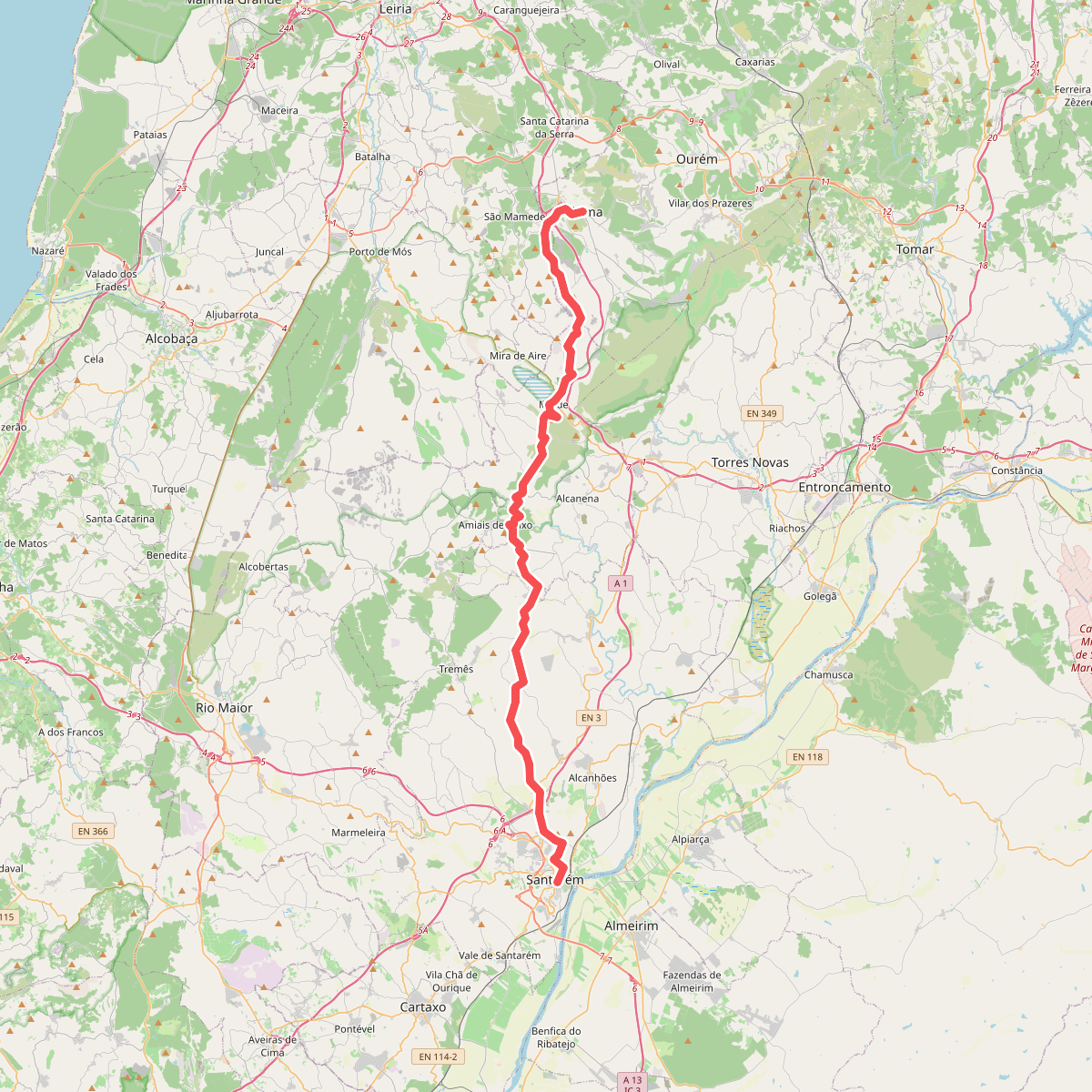
#1. Caminho de Tejo
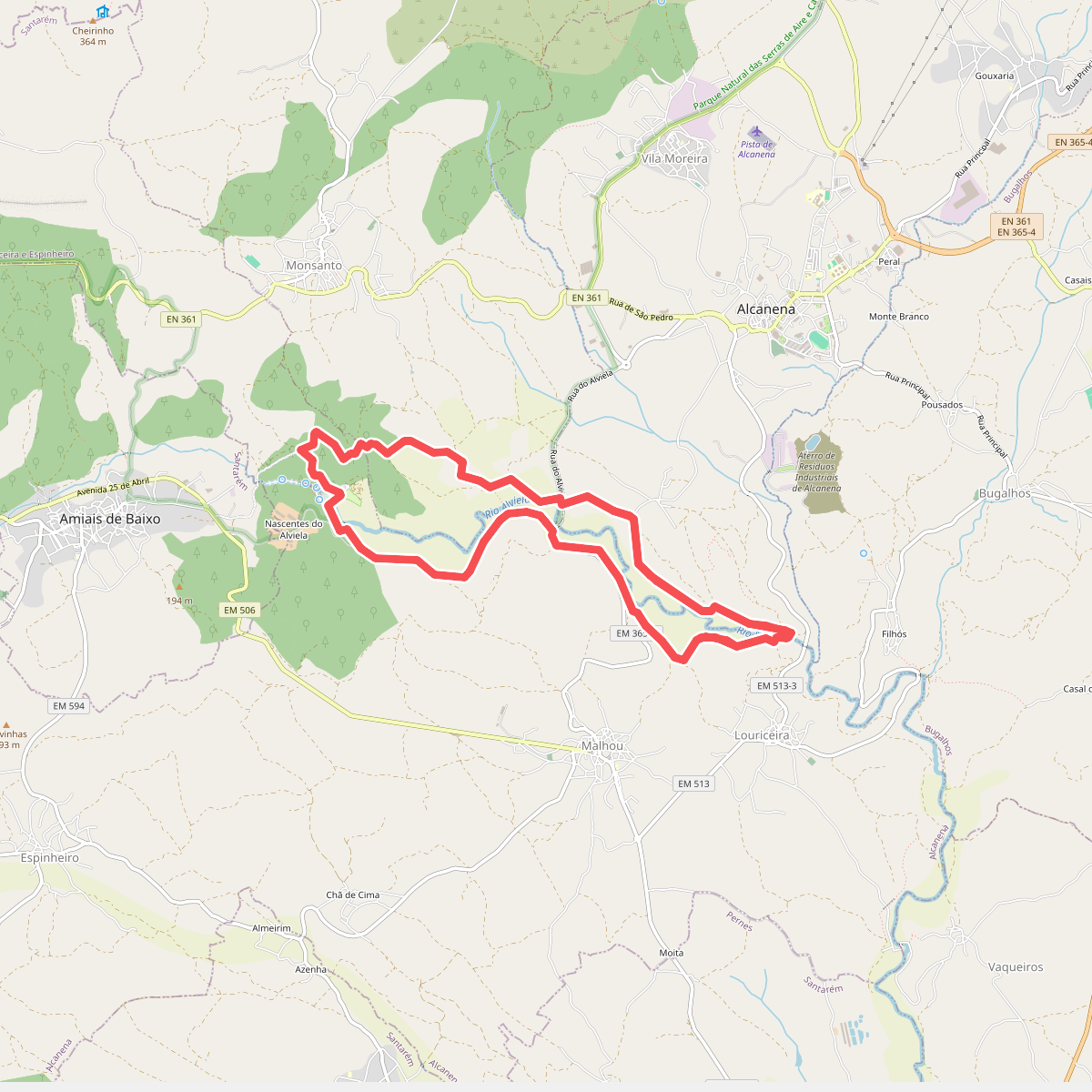
#2. Entre o Aqueduto e o Alviela
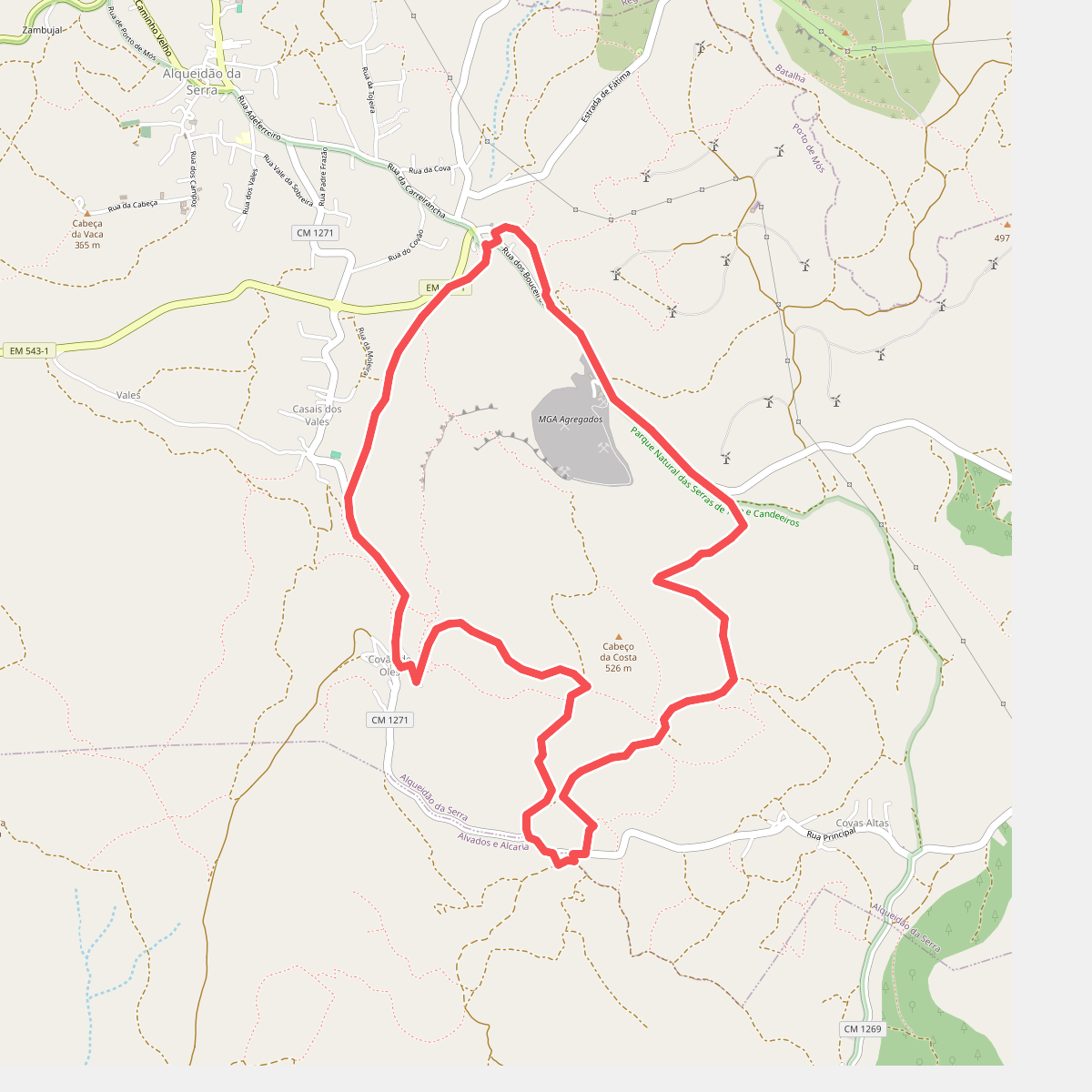
#3. Estrada Romana de Alqueidão da Serra
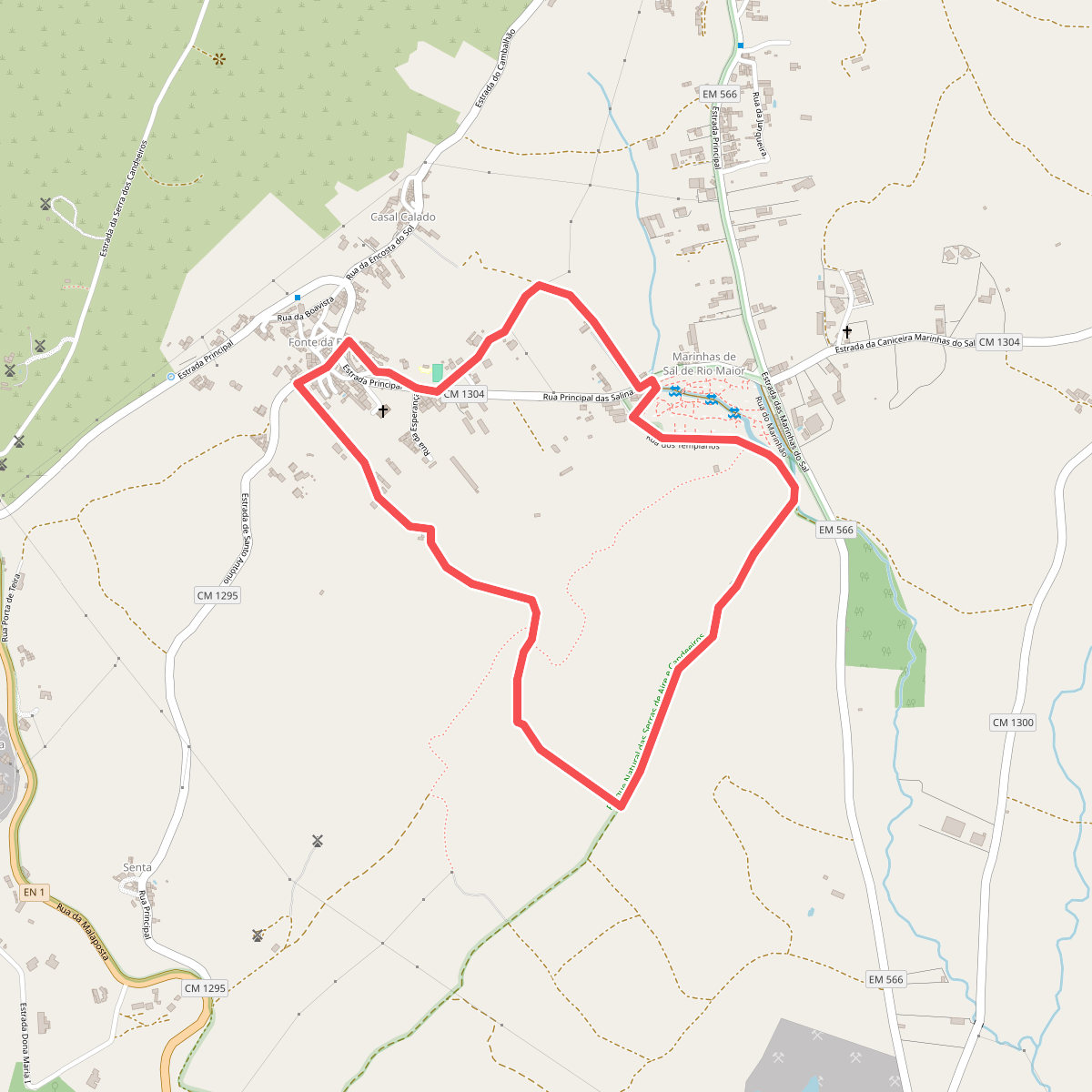
#4. Marinhas de Sal
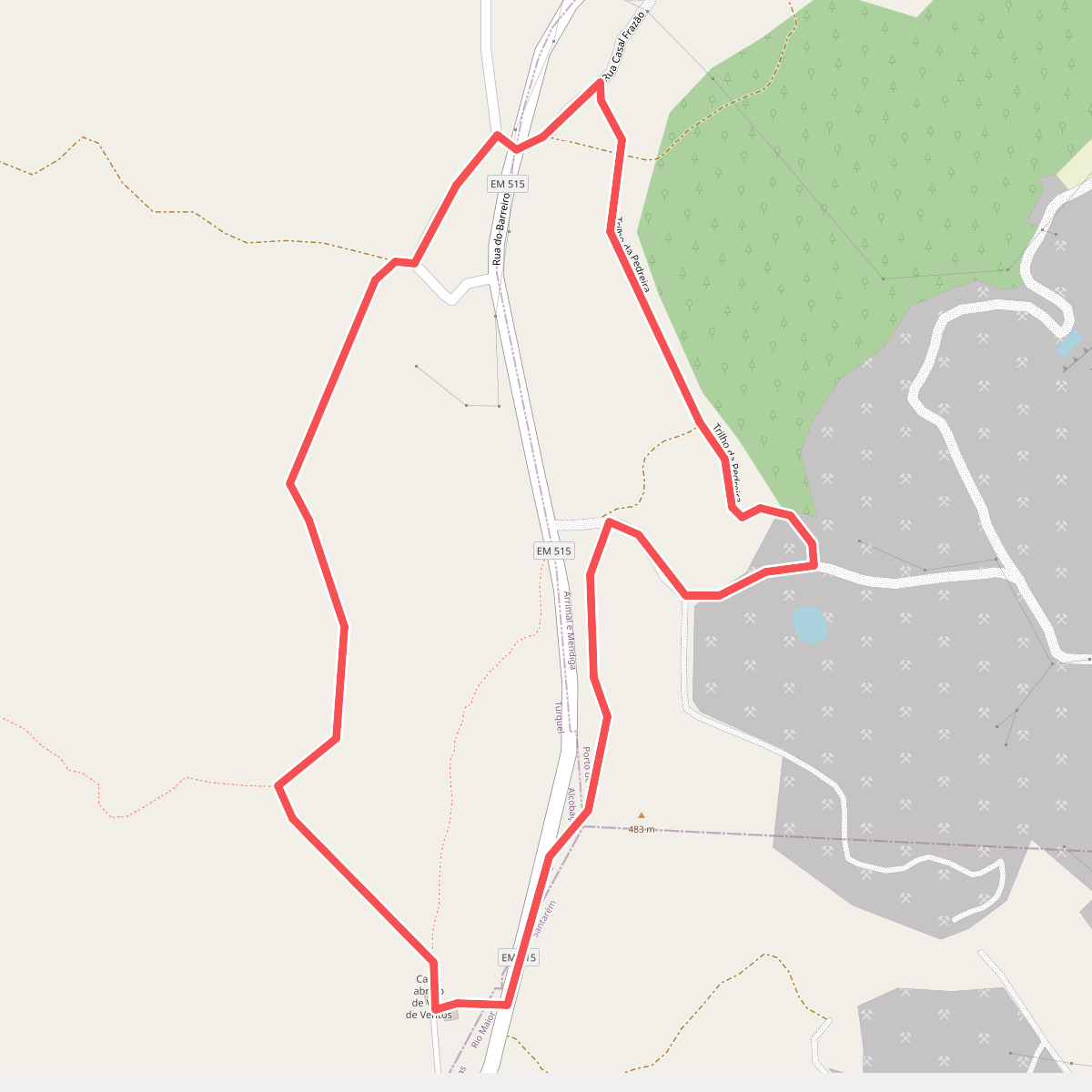
#5. PR1 - Vale de Ventos
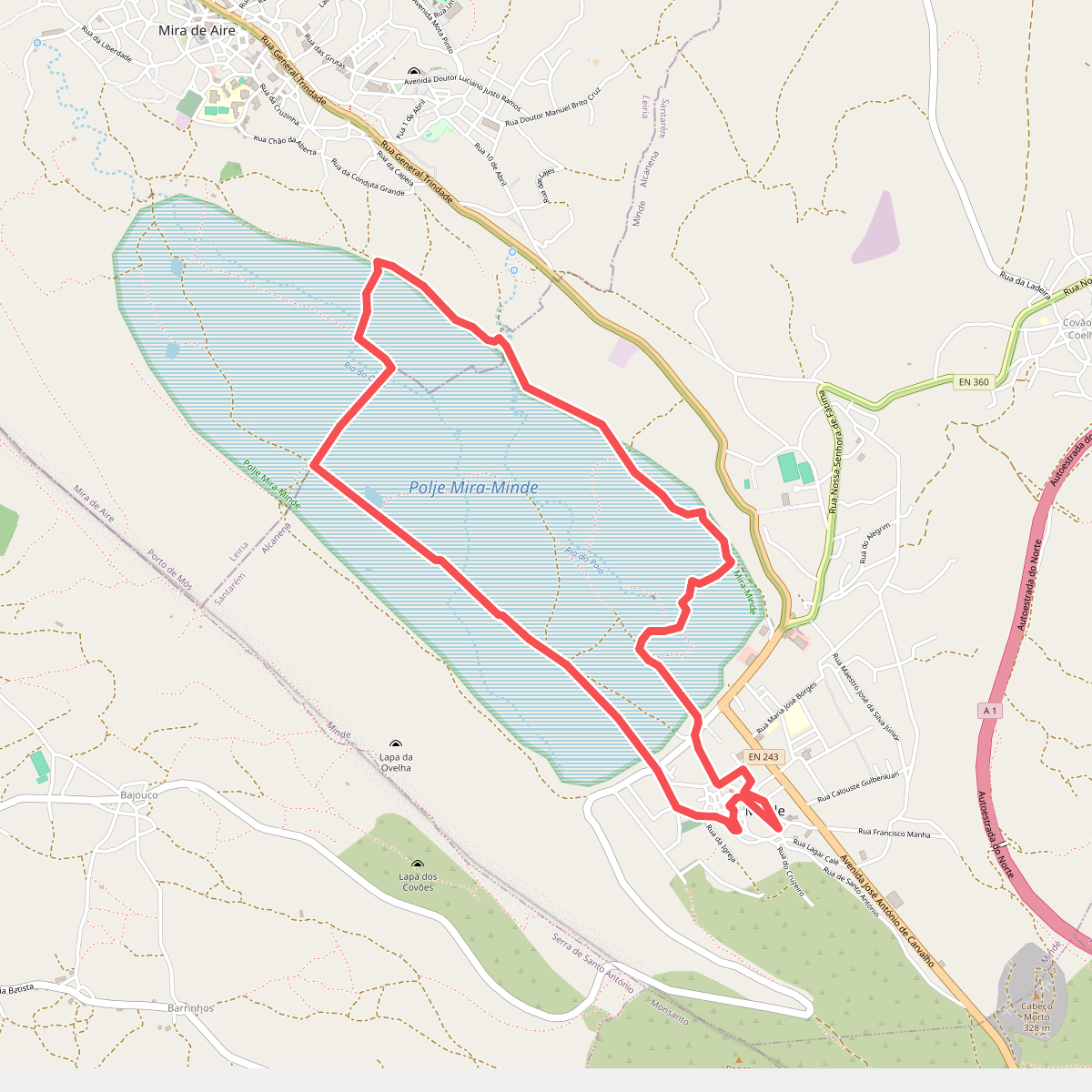
#6. Rota de Minde
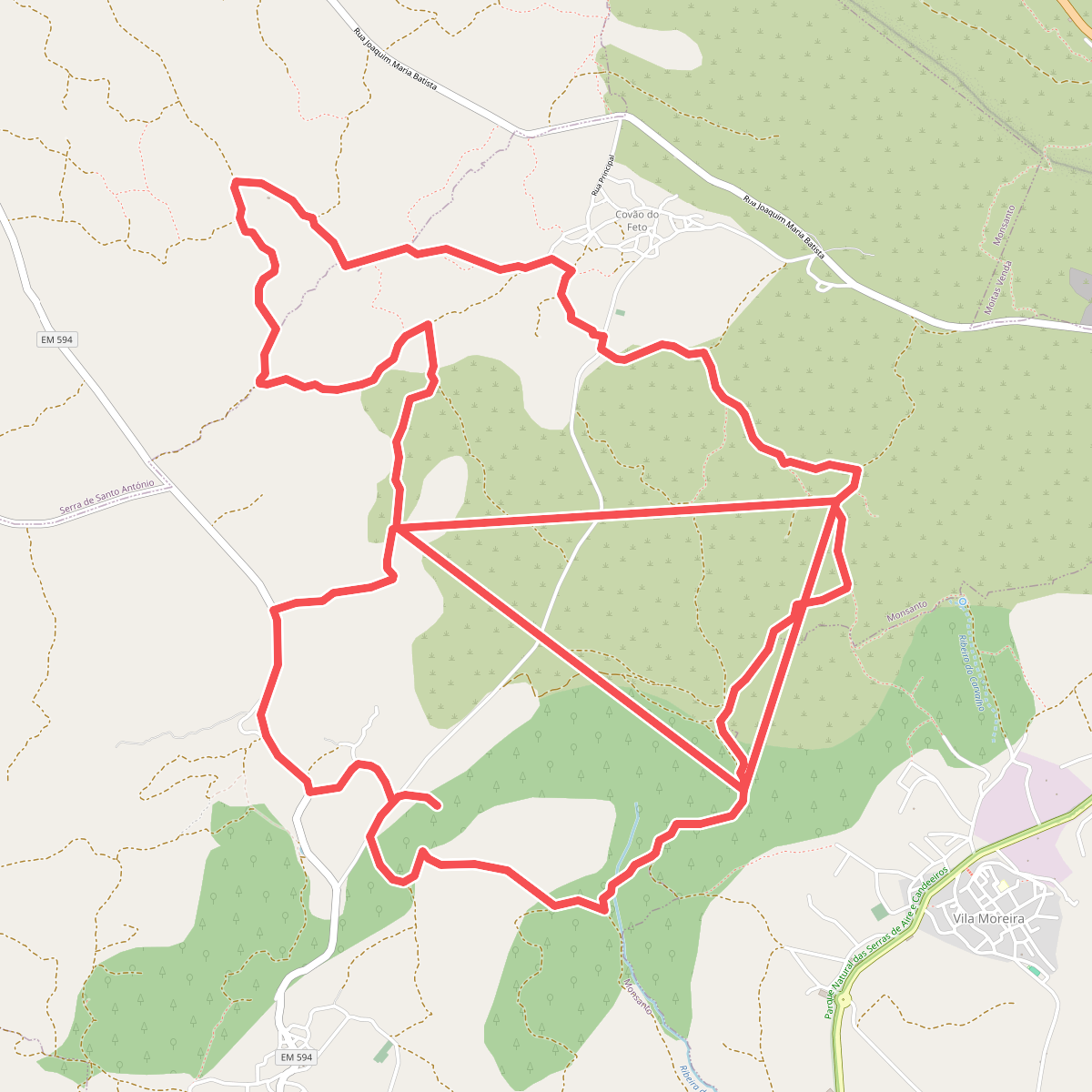
#7. Rota dos Arrifes
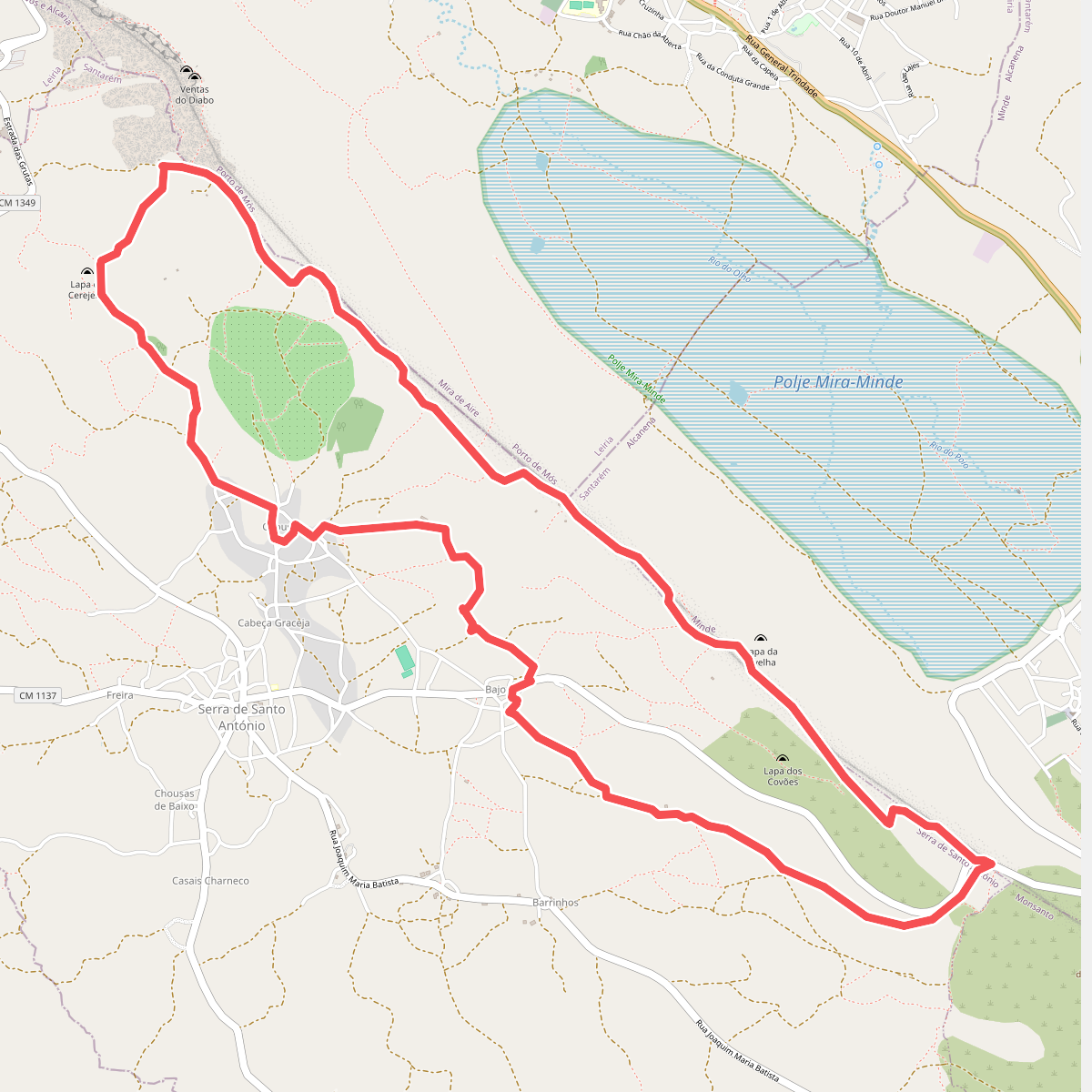
#8. Rota dos Frades