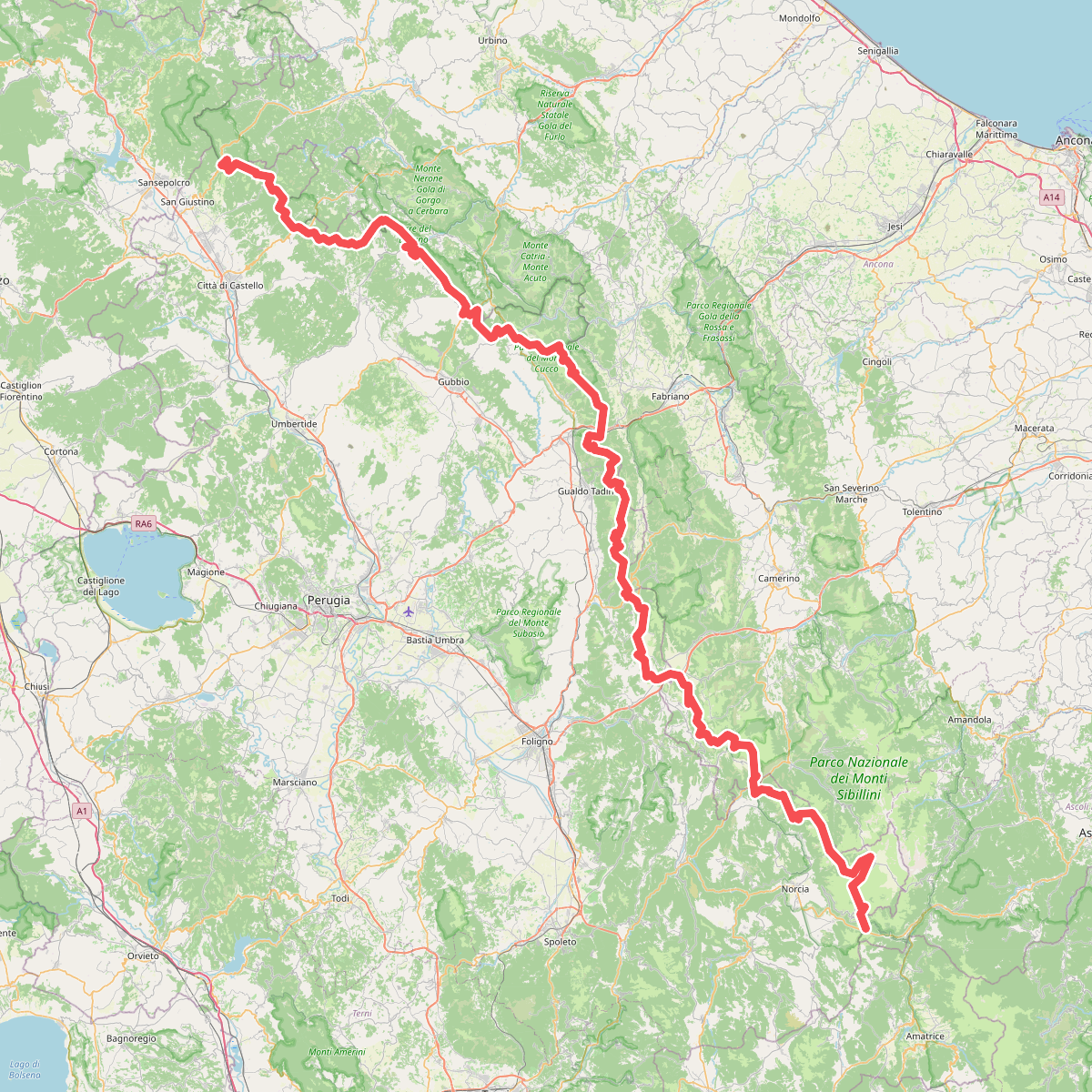


The best hiking routes in Riserva Monti Maggio e Nero
Discover the best walks in Riserva Monti Maggio e Nero. 18 routes on the map, with descriptions, photos and GPX.
About Riserva Monti Maggio e Nero
Riserva Monti Maggio e Nero offers a rugged, upland walking experience dominated by limestone ridges, dense beech forests, and high-altitude pastures. Unlike the softer, clay-based hills of the lower Tuscan valleys, this reserve is defined by its stark, karst topography. Walkers will notice how the grey rock constantly breaks through the thin soil, creating a landscape of sinkholes, exposed limestone pavements, and steep scree slopes that require careful stepping.
Read more
About Riserva Monti Maggio e Nero
Riserva Monti Maggio e Nero offers a rugged, upland walking experience dominated by limestone ridges, dense beech forests, and high-altitude pastures. Unlike the softer, clay-based hills of the lower Tuscan valleys, this reserve is defined by its stark, karst topography. Walkers will notice how the grey rock constantly breaks through the thin soil, creating a landscape of sinkholes, exposed limestone pavements, and steep scree slopes that require careful stepping.
Read moreRiserva Monti Maggio e Nero offers a rugged, upland walking experience dominated by limestone ridges, dense beech forests, and high-altitude pastures. Unlike the softer, clay-based hills of the lower Tuscan valleys, this reserve is defined by its stark, karst topography. Walkers will notice how the grey rock constantly breaks through the thin soil, creating a landscape of sinkholes, exposed limestone pavements, and steep scree slopes that require careful stepping.
The terrain underfoot changes sharply between the sheltered woods and the open ridges. Under the canopy of the beech trees, the paths are often soft with deep leaf litter and damp earth. Once you climb above the tree line toward the summits of Monte Maggio and Monte Nero, the ground transitions to rough, stony tracks and loose limestone fragments. There are no paved promenades or boardwalks here, only narrow, waymarked dirt trails that follow the natural contours of the mountain.
This area is best suited for those who prefer quiet, self-reliant walking over manicured parklands. The reserve does not feature dramatic alpine peaks or deep gorges, but rather a series of wind-scoured, grassy ridges that offer clear views of the surrounding Apennine foothills. In late spring, particularly around May, the high meadows are easily identified by their sudden cover of wild orchids and mountain grasses, contrasting with the dark, dense woodland blocks that cover the lower slopes.
Hiking routes in Riserva Monti Maggio e Nero (18)

#1. Anello di Giano

#2. Costa dei Quarti

#3. Fontanile di Campitella

#4. Giro dei Monti

#5. Le creste

#6. Passaiola alta

#7. Passaiola bassa

#8. Sentiero dei Santi

#9. Sentiero della Spina

#10. Sentiero delle 2 Valli

#11. Sentiero delle Fragole