The best hiking routes in ZEC A Marronda
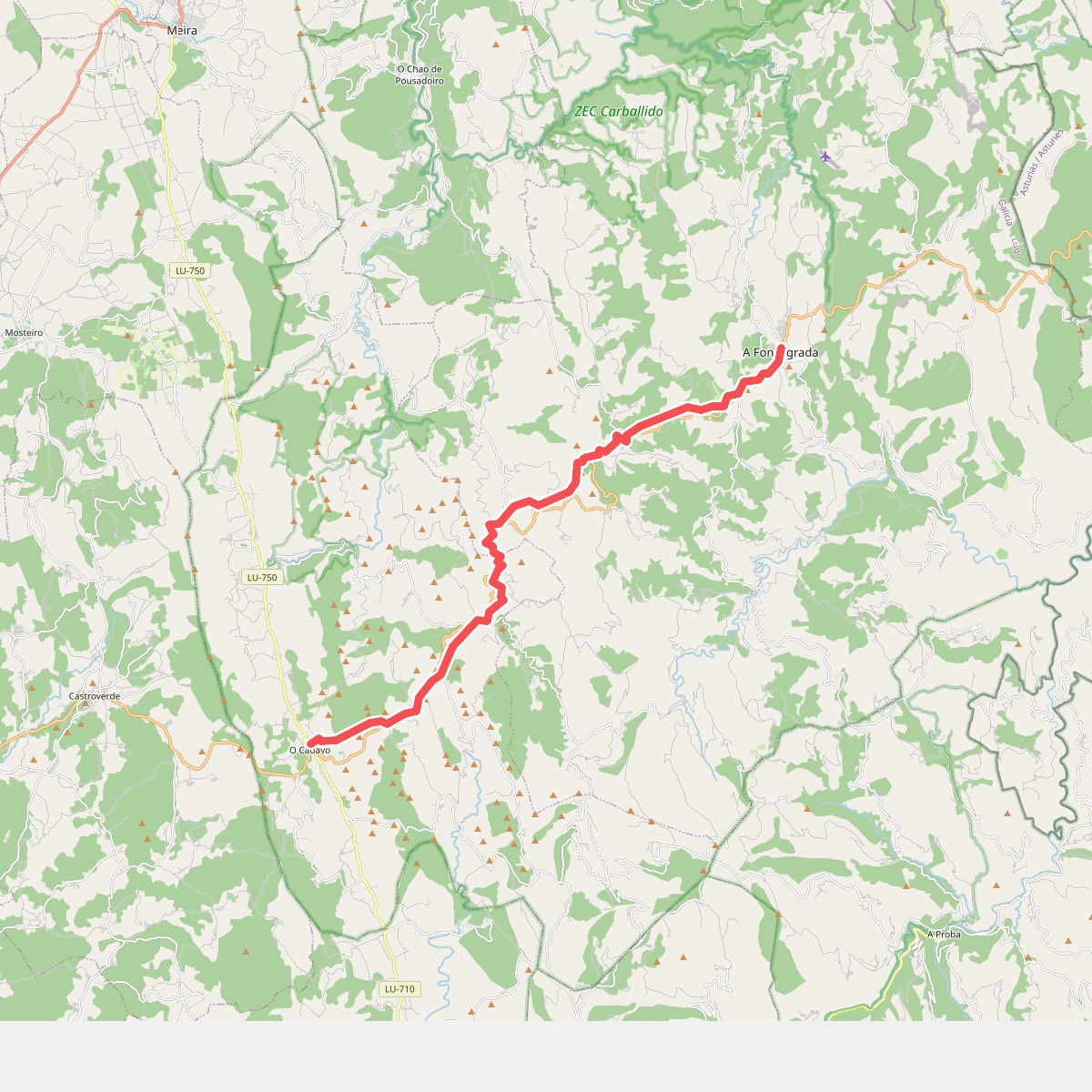
Discover the best walks in ZEC A Marronda. 1 routes on the map, with descriptions, photos and GPX.
Managed by Xunta de Galicia
About ZEC A Marronda
ZEC A Marronda protects a dense Atlantic forest in the mountainous interior of Galicia. Unlike the coastal pine plantations or the open pastures of the surrounding region, this reserve is defined by one of the southernmost native beech woods in Europe, mixed with ancient oaks, chestnuts, and birches. The terrain is steep and rugged, shaped by the narrow valley of the Eo River, meaning walkers should expect continuous ascents and descents rather than flat paths. Underfoot, the tracks are mostly dirt and stone, often covered in a thick layer of leaf litter and moss, with exposed tree roots requiring careful footing.
Read more
About ZEC A Marronda
ZEC A Marronda protects a dense Atlantic forest in the mountainous interior of Galicia. Unlike the coastal pine plantations or the open pastures of the surrounding region, this reserve is defined by one of the southernmost native beech woods in Europe, mixed with ancient oaks, chestnuts, and birches. The terrain is steep and rugged, shaped by the narrow valley of the Eo River, meaning walkers should expect continuous ascents and descents rather than flat paths. Underfoot, the tracks are mostly dirt and stone, often covered in a thick layer of leaf litter and moss, with exposed tree roots requiring careful footing.
Read moreZEC A Marronda protects a dense Atlantic forest in the mountainous interior of Galicia. Unlike the coastal pine plantations or the open pastures of the surrounding region, this reserve is defined by one of the southernmost native beech woods in Europe, mixed with ancient oaks, chestnuts, and birches. The terrain is steep and rugged, shaped by the narrow valley of the Eo River, meaning walkers should expect continuous ascents and descents rather than flat paths. Underfoot, the tracks are mostly dirt and stone, often covered in a thick layer of leaf litter and moss, with exposed tree roots requiring careful footing.
As you walk, the transition between the damp, shaded valley floor and the drier upper slopes is highly visible. The lower sections near the river are dominated by ferns, lichens, and alders, where the air feels constantly humid. Higher up, the canopy opens slightly to reveal the massive trunks of the beech trees, which block out most of the direct sunlight and limit undergrowth. This creates a cathedral-like forest interior that feels enclosed and secluded, without the wide-open mountain vistas found in other parts of northern Spain.
The reserve is best suited for those who prefer quiet, forested environments over dramatic peaks or signposted boardwalks. In November, the beech leaves turn a deep copper color before falling, which completely alters the light inside the canopy. While the main trails are established, they remain rustic and can be slippery, lacking the manicured infrastructure of more tourist-heavy parks. It is a place for steady, self-reliant walking through a dense and shaded woodland ecosystem.