

The best hiking routes in Boschi di Terne - Pupaggi
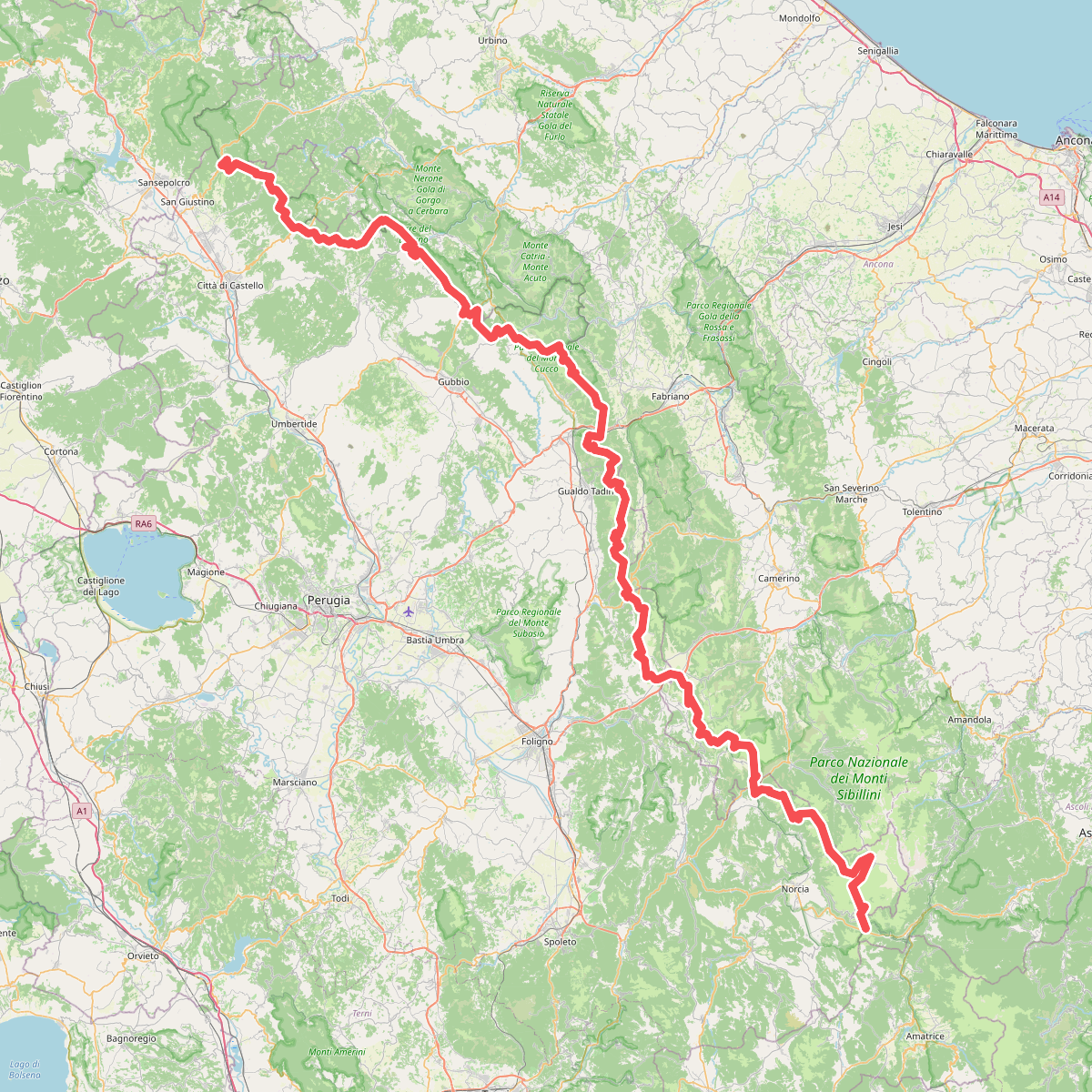
Discover the best walks in Boschi di Terne - Pupaggi. 1 routes on the map, with descriptions, photos and GPX.
Managed by Regione Umbria
About Boschi di Terne - Pupaggi
Boschi di Terne - Pupaggi is a dense, wooded upland area in Umbria characterized by steep limestone slopes, Mediterranean scrub, and mixed deciduous forests. Unlike the open, cultivated valleys nearby, this reserve offers a closed canopy dominated by holm oak, hornbeam, and flowering ash. The terrain is defined by its rugged, karst topography, where limestone outcrops break through the thin soil, creating a sharp contrast between the shaded forest floor and the dry, rocky ridges.
Read more
About Boschi di Terne - Pupaggi
Boschi di Terne - Pupaggi is a dense, wooded upland area in Umbria characterized by steep limestone slopes, Mediterranean scrub, and mixed deciduous forests. Unlike the open, cultivated valleys nearby, this reserve offers a closed canopy dominated by holm oak, hornbeam, and flowering ash. The terrain is defined by its rugged, karst topography, where limestone outcrops break through the thin soil, creating a sharp contrast between the shaded forest floor and the dry, rocky ridges.
Read moreBoschi di Terne - Pupaggi is a dense, wooded upland area in Umbria characterized by steep limestone slopes, Mediterranean scrub, and mixed deciduous forests. Unlike the open, cultivated valleys nearby, this reserve offers a closed canopy dominated by holm oak, hornbeam, and flowering ash. The terrain is defined by its rugged, karst topography, where limestone outcrops break through the thin soil, creating a sharp contrast between the shaded forest floor and the dry, rocky ridges.
Walkers will find a network of narrow, unpaved earth tracks and stony paths that climb through the hillsides. Underfoot, the ground is a mix of loose limestone gravel and leaf litter, requiring steady footing on the steeper gradients. The landscape lacks wide-open vistas or high alpine peaks, offering instead an intimate, enclosed woodland experience where the focus is on the dense vegetation and the quiet, shaded ravines.
In late spring, particularly during May, the undergrowth becomes lively with wild orchids and cyclamens blooming along the path edges. The area is generally quiet, attracting mostly local walkers who come for the shade and the steady, moderate climbs. Because there are no paved promenades or boardwalks, the reserve retains a rustic, undeveloped character that suits those looking for a straightforward, natural woodland walk.