

The best hiking routes in Düppeler Forst
Discover the best walks in Düppeler Forst. 13 routes on the map, with descriptions, photos and GPX.
About Düppeler Forst
Düppeler Forst offers a dense woodland experience on the southwestern edge of Berlin, characterized by its transition from dry, sandy pine forests to damp oak and hornbeam groves. Unlike the open heathlands or steep hills found elsewhere in Germany, this flat to gently undulating glacial landscape is defined by its close canopy and a network of quiet forest tracks. Walkers will notice how the ground changes underfoot, shifting from soft pine needle paths on the higher ground to damp, dark soil near the marshy depressions and kettle lakes that dot the area.
Read more
About Düppeler Forst
Düppeler Forst offers a dense woodland experience on the southwestern edge of Berlin, characterized by its transition from dry, sandy pine forests to damp oak and hornbeam groves. Unlike the open heathlands or steep hills found elsewhere in Germany, this flat to gently undulating glacial landscape is defined by its close canopy and a network of quiet forest tracks. Walkers will notice how the ground changes underfoot, shifting from soft pine needle paths on the higher ground to damp, dark soil near the marshy depressions and kettle lakes that dot the area.
Read moreDüppeler Forst offers a dense woodland experience on the southwestern edge of Berlin, characterized by its transition from dry, sandy pine forests to damp oak and hornbeam groves. Unlike the open heathlands or steep hills found elsewhere in Germany, this flat to gently undulating glacial landscape is defined by its close canopy and a network of quiet forest tracks. Walkers will notice how the ground changes underfoot, shifting from soft pine needle paths on the higher ground to damp, dark soil near the marshy depressions and kettle lakes that dot the area.
As you walk, the layout of the trees reveals the forest's history, where straight rows of planted pines stand alongside older, twisted oaks that have survived from earlier woodland eras. The dampest sections, particularly around the margins of the Lindwerder island and the Havel riverbank, feature boardwalks and muddy paths where wetland vegetation thrives. The interior of the forest remains largely shaded and enclosed, offering few wide views but providing a consistent, sheltered environment.
This forest is well-suited for those who prefer steady, level walking on wide, unpaved forestry tracks rather than steep climbs or rocky trails. The lakeside paths along the Havel can become busy with walkers and cyclists, especially on weekends, while the deeper interior tracks remain much quieter. It is a classic Brandenburg woodland, where the main appeal lies in the quiet repetition of the trees and the sudden appearance of small, hidden woodland ponds.
Hiking routes in Düppeler Forst (13)

#1. 66-Seen-Wanderweg

#2. BUGA-Weg 2001

#3. Europäischer Fernwanderweg E11, Berlin
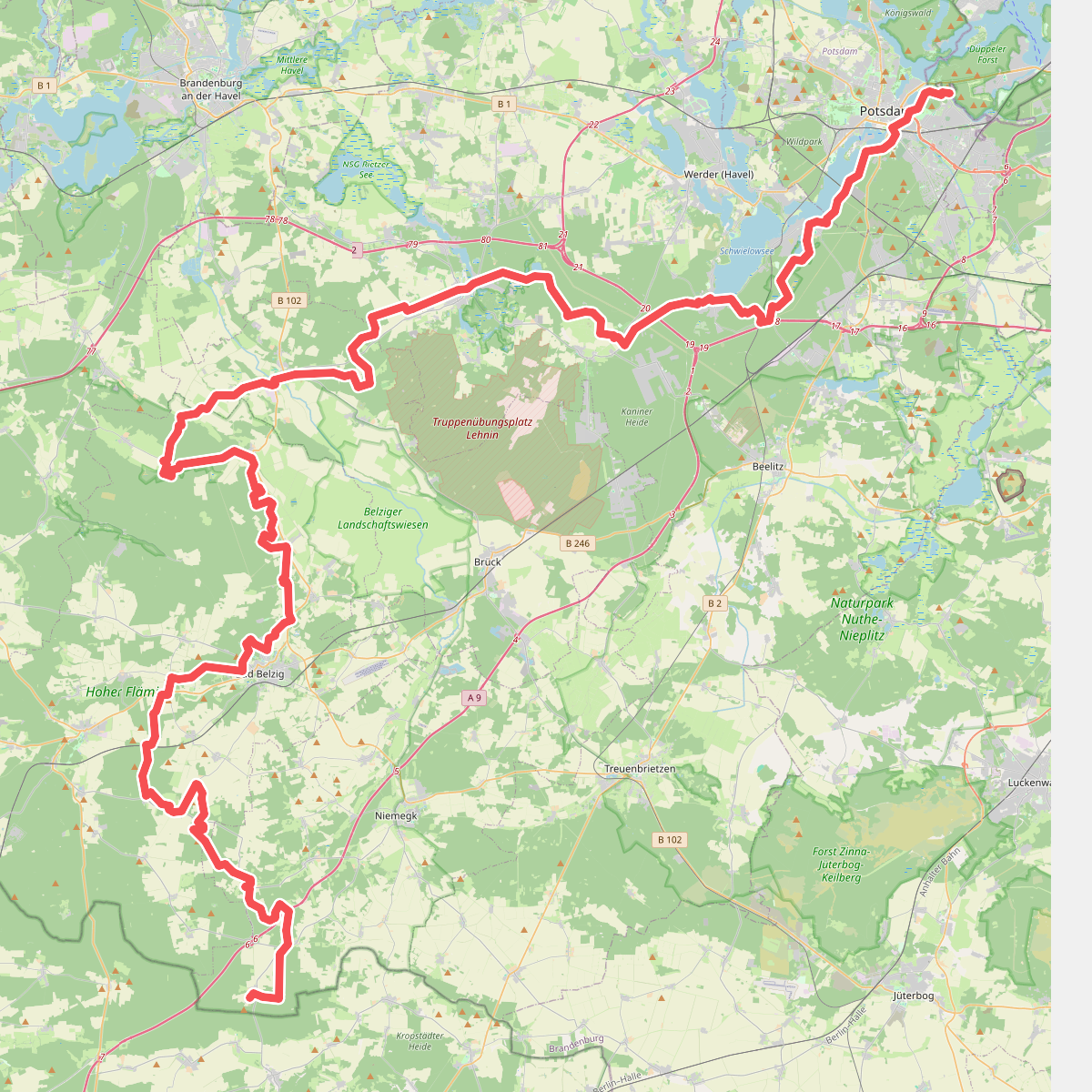
#4. Europäischer Fernwanderweg E11, Brandenburg (W)

#5. Fontaneweg F3

#6. Havelseenweg

#7. JW Berlin - Leipzig Segment Teltow - Beelitz

#8. Kanalauenweg

#9. Spreeweg

#10. Stadtwanderroute Hermannswerder - Glienicker Brücke

#11. Teltowkanalweg