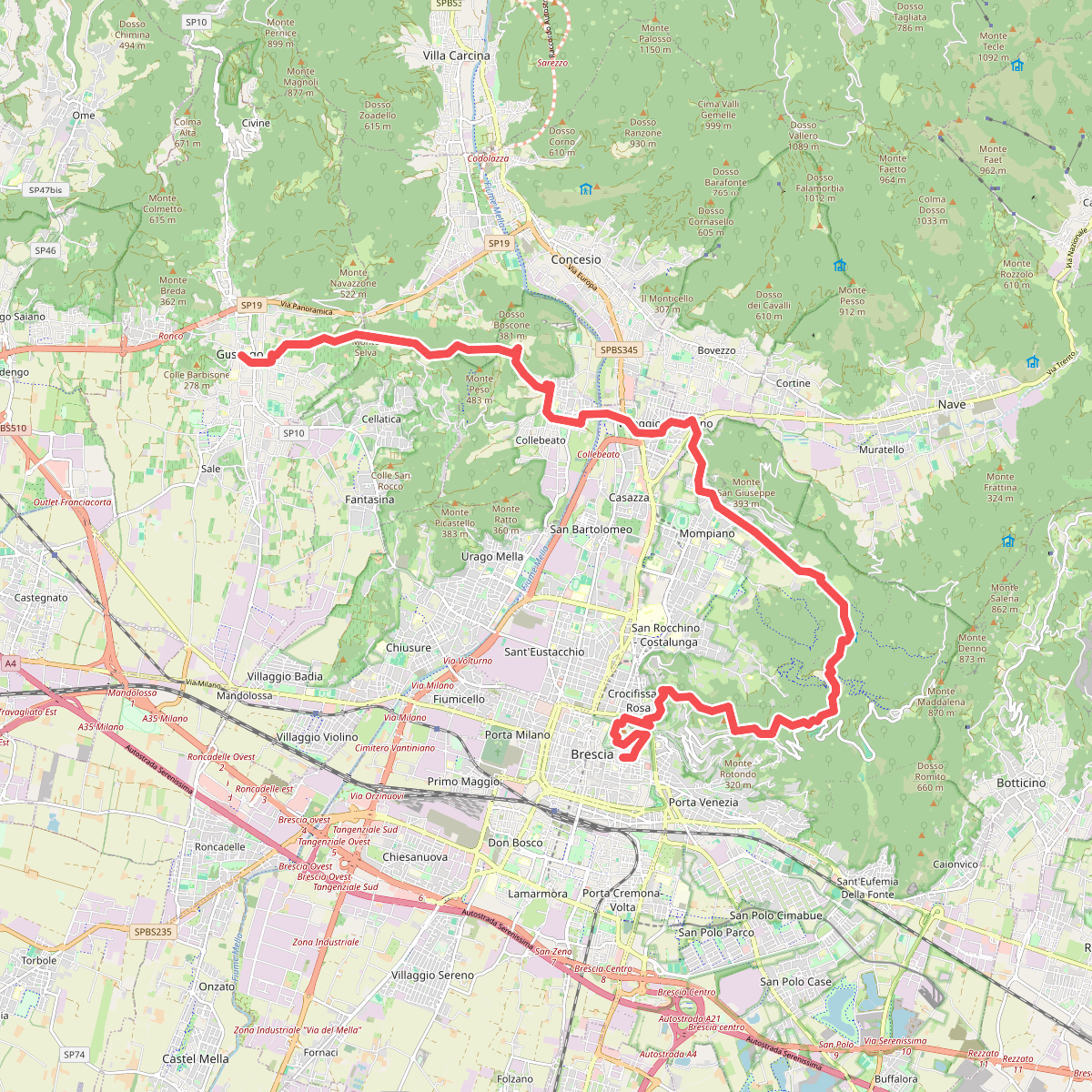


The best hiking routes in Parco delle Colline di Brescia
Discover the best walks in Parco delle Colline di Brescia. 39 routes on the map, with descriptions, photos and GPX.
Managed by Associazione Amici dei Parchi e delle Riserve Naturali
About Parco delle Colline di Brescia
Parco delle Colline di Brescia wraps around the northern and western edges of Brescia, offering a sudden transition from urban streets to steep, wooded limestone hills. Unlike the flat plains of the Po Valley to the south, this park is characterized by rugged karst topography, dry grassy slopes known as xerobrometi, and dense chestnut and oak woodlands. The terrain is defined by its limestone geology, which you will notice in the exposed white rock outcrops and the absence of surface streams, as water quickly drains into the porous stone.
Read more
About Parco delle Colline di Brescia
Parco delle Colline di Brescia wraps around the northern and western edges of Brescia, offering a sudden transition from urban streets to steep, wooded limestone hills. Unlike the flat plains of the Po Valley to the south, this park is characterized by rugged karst topography, dry grassy slopes known as xerobrometi, and dense chestnut and oak woodlands. The terrain is defined by its limestone geology, which you will notice in the exposed white rock outcrops and the absence of surface streams, as water quickly drains into the porous stone.
Read moreParco delle Colline di Brescia wraps around the northern and western edges of Brescia, offering a sudden transition from urban streets to steep, wooded limestone hills. Unlike the flat plains of the Po Valley to the south, this park is characterized by rugged karst topography, dry grassy slopes known as xerobrometi, and dense chestnut and oak woodlands. The terrain is defined by its limestone geology, which you will notice in the exposed white rock outcrops and the absence of surface streams, as water quickly drains into the porous stone.
Underfoot, the trails vary from wide, gravel-strewn fire roads to narrow, rocky singletracks that require careful stepping over loose stones and exposed tree roots. The southern slopes are dry and scrubby, dominated by wild olive trees and hardy shrubs, while the northern-facing valleys hold deeper soil, supporting damp, mossy woods. The elevation changes are constant but moderate, offering a hilly workout rather than high-alpine climbing.
In May, the dry grasslands on the upper slopes of Monte Maddalena are particularly distinct, filled with wild orchids and specialized grasses that thrive in the thin soil. While the lower paths near the city edge and the main trail to the summit of Monte Maddalena are popular with local runners and walkers, the deeper valleys and the paths heading toward Colle di Sant'Eufemia offer a much quieter, more secluded woodland experience.
Hiking routes in Parco delle Colline di Brescia (39)
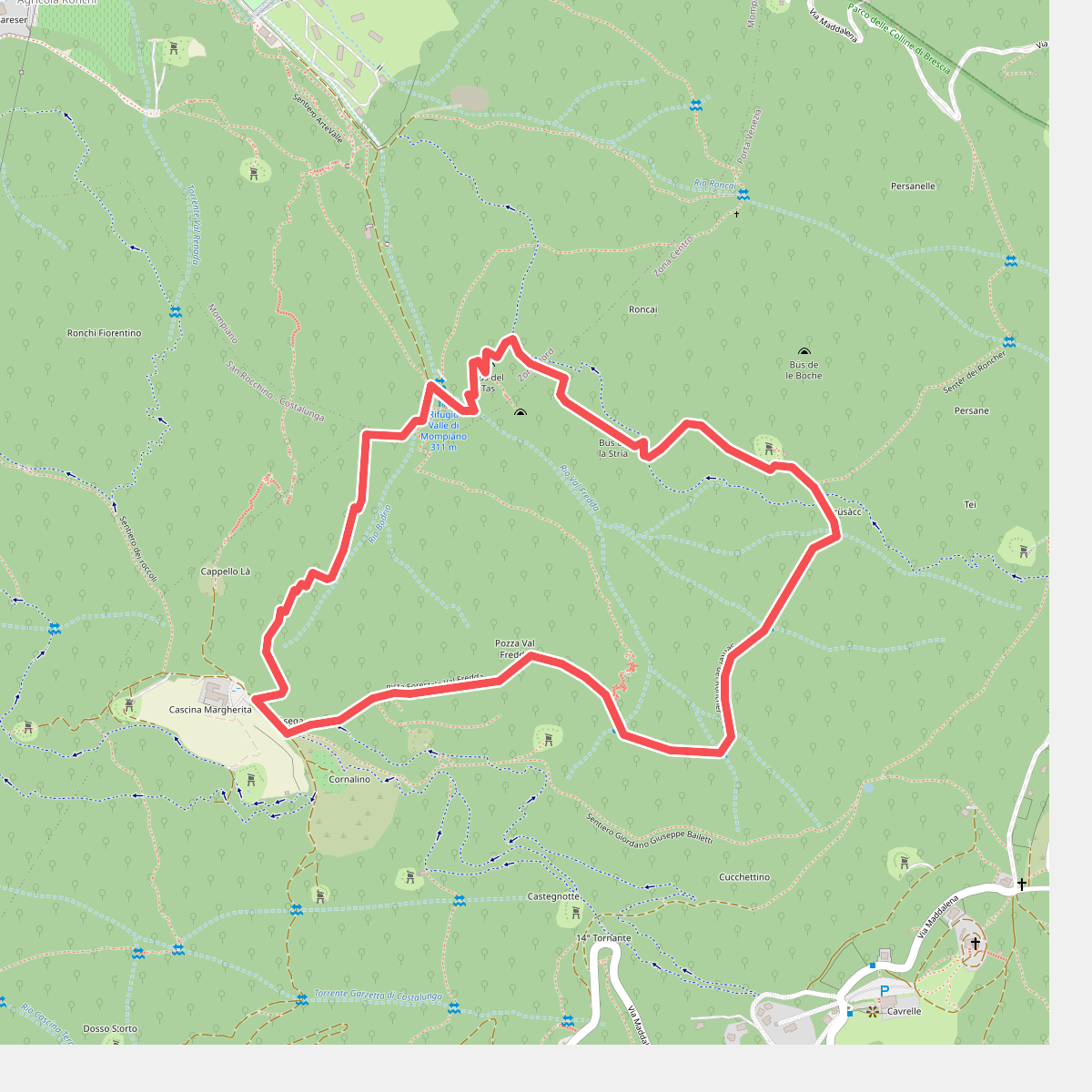
#1. Anello dei Brüsàcc
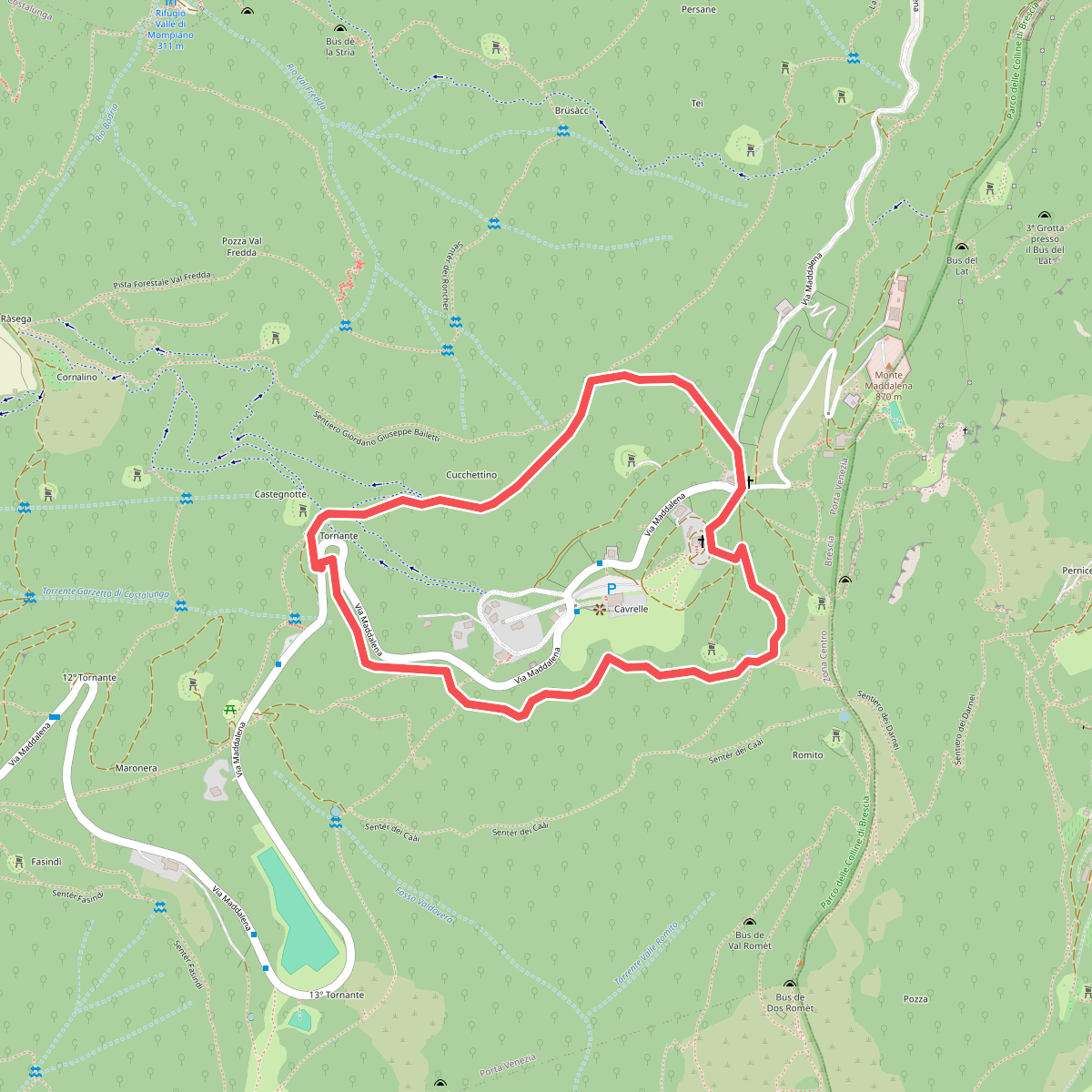
#2. Anello della Maddalena
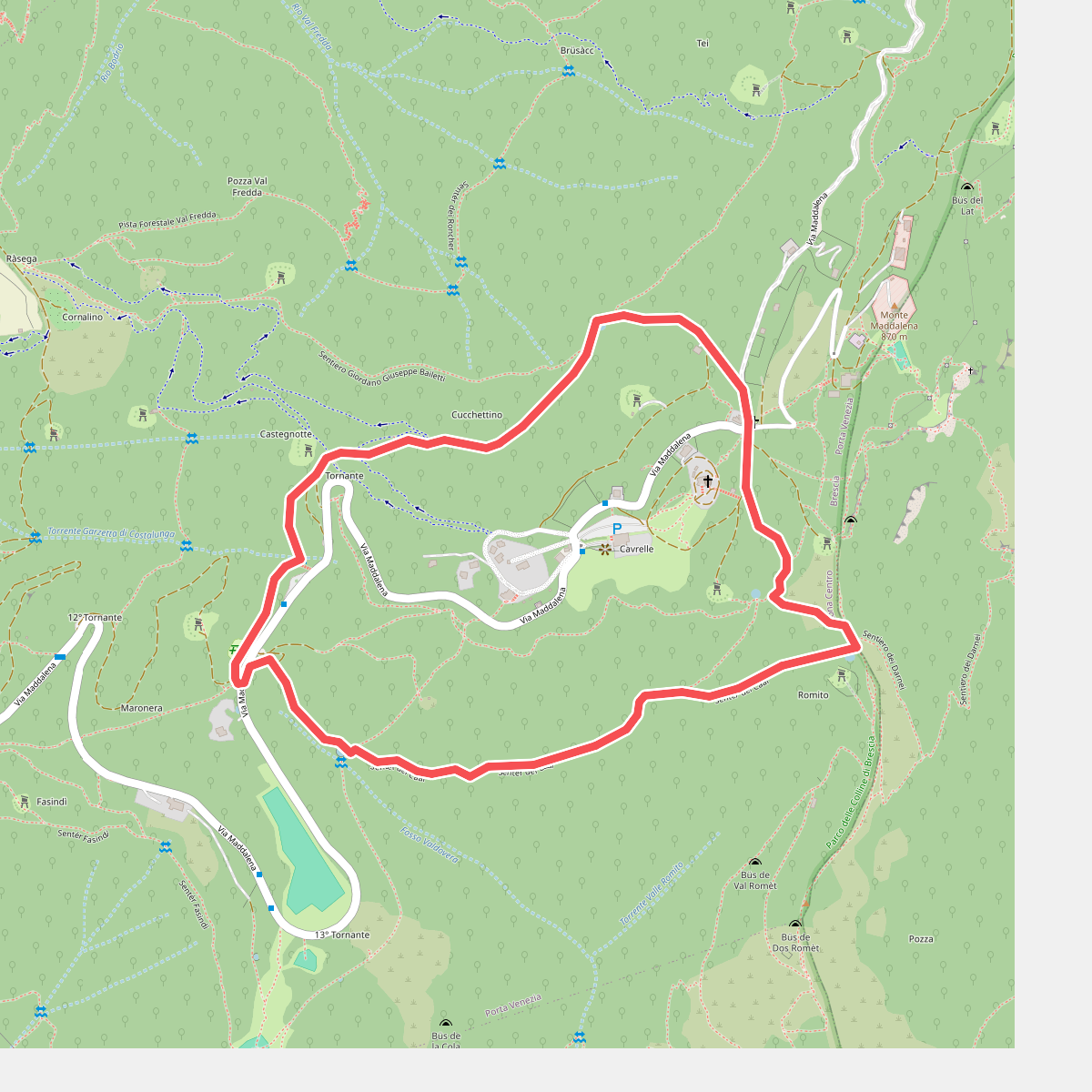
#3. Anello delle Pozze
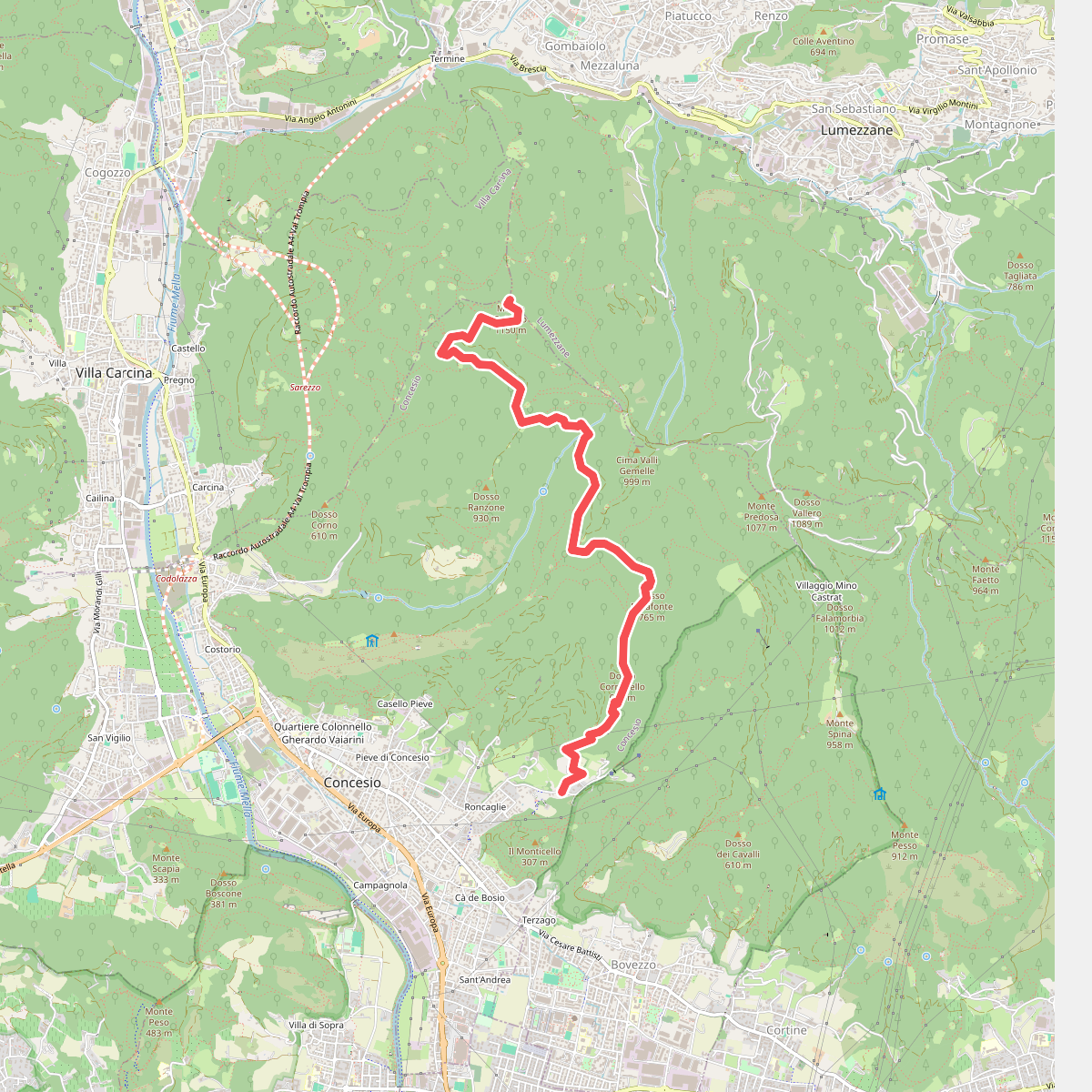
#4. Concesio (Roncaglie) - Monte Palosso
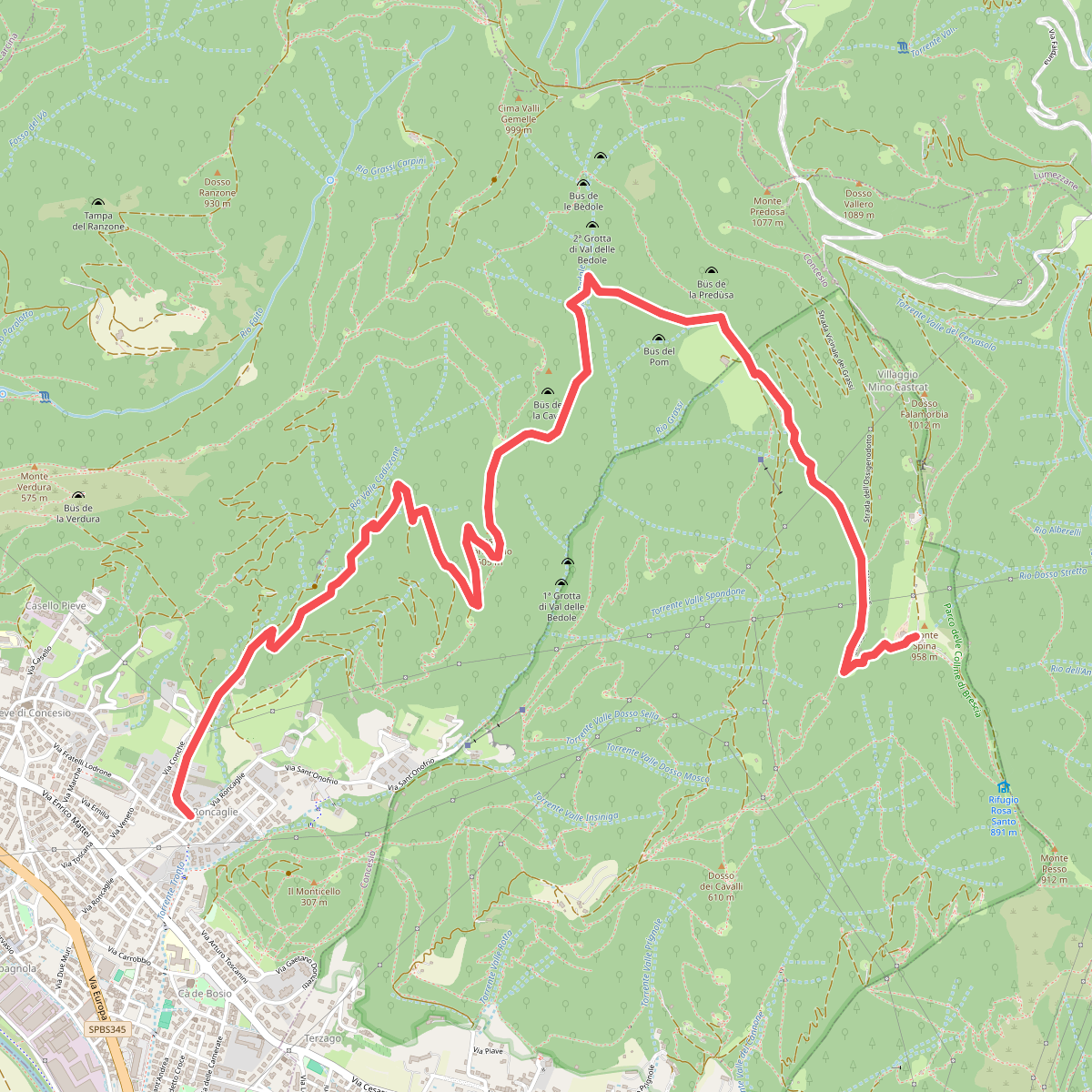
#5. Concesio (Roncaglie) - Sant'Onofrio
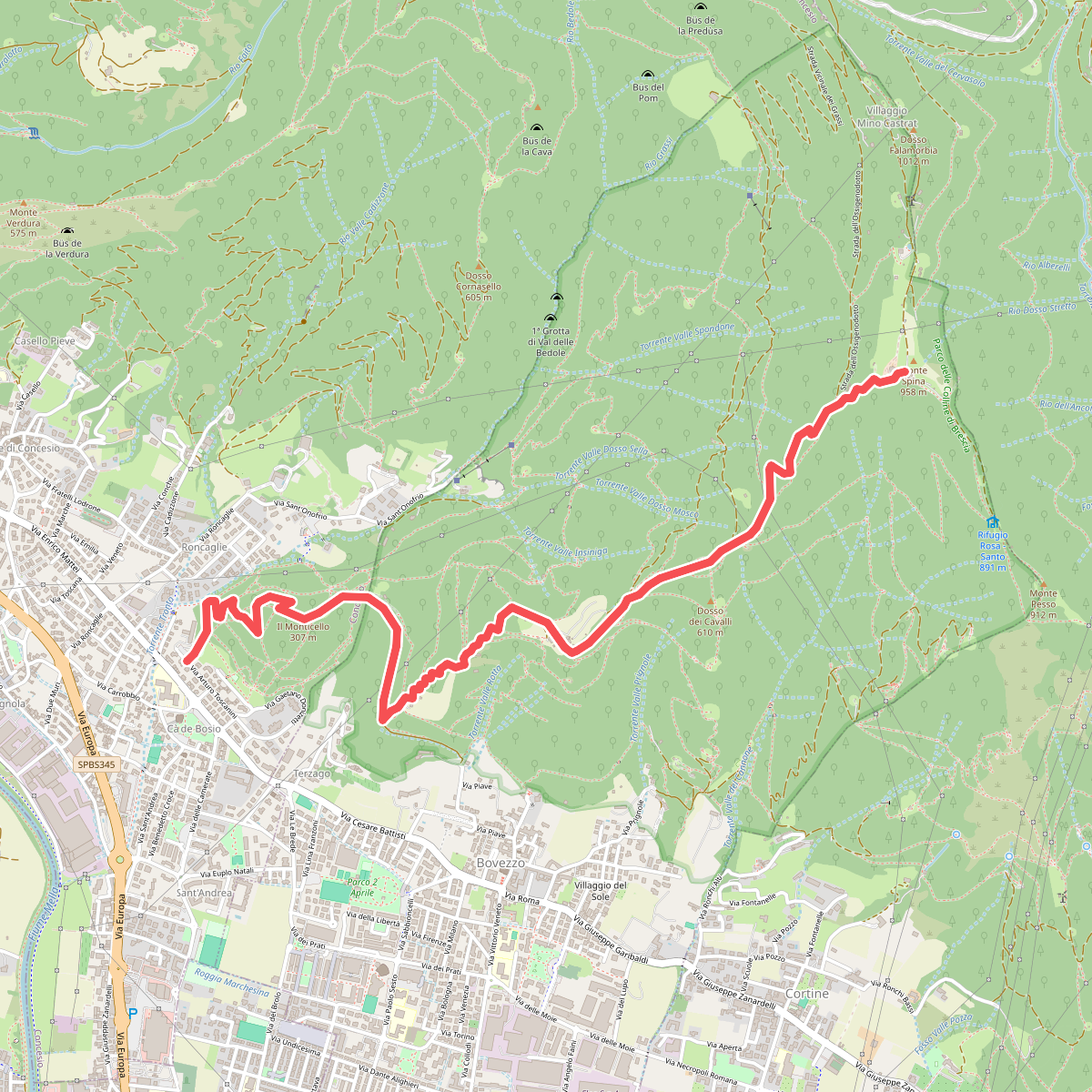
#6. Concesio (Sant'Andrea) - Sant'Onofrio
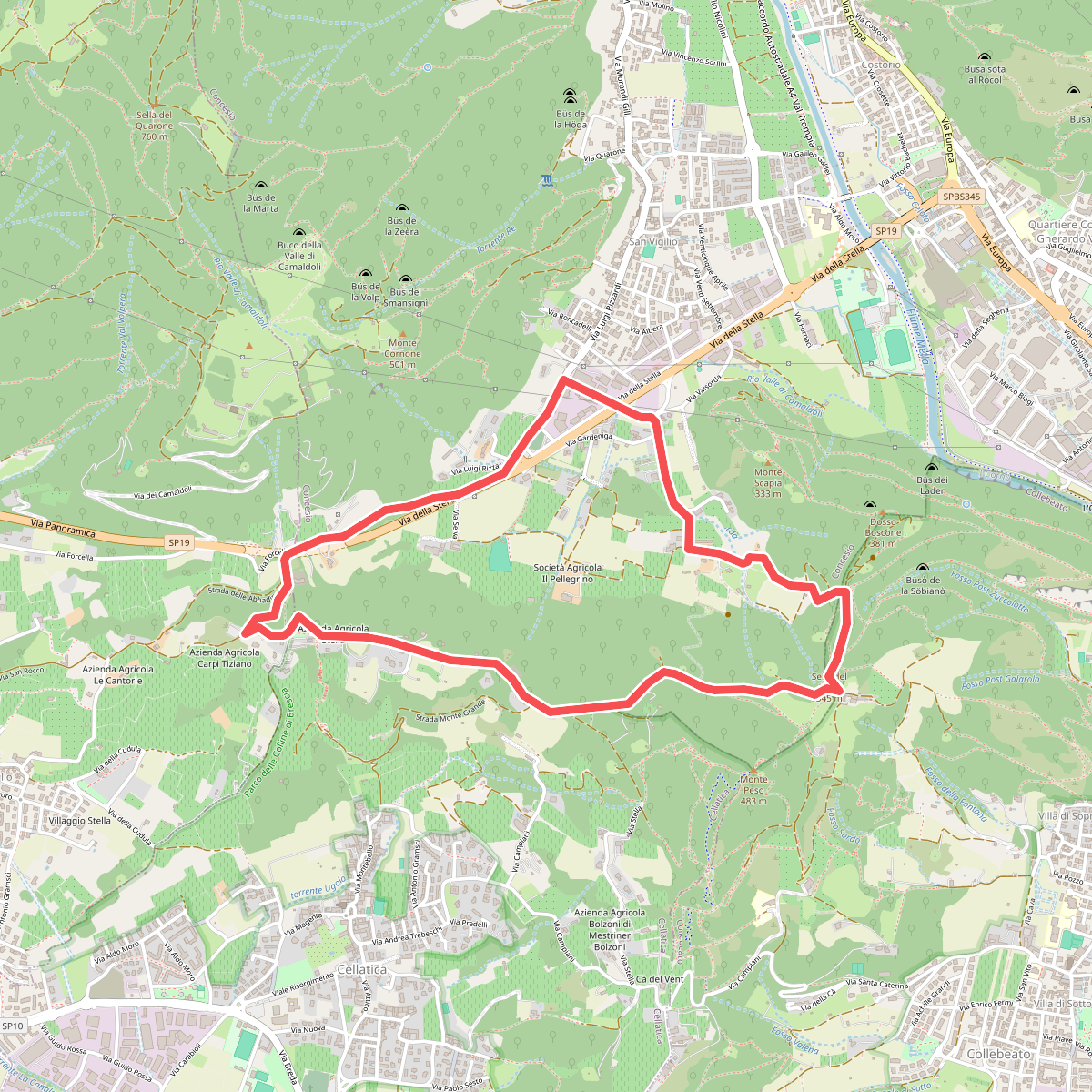
#7. Concesio - Valsorda
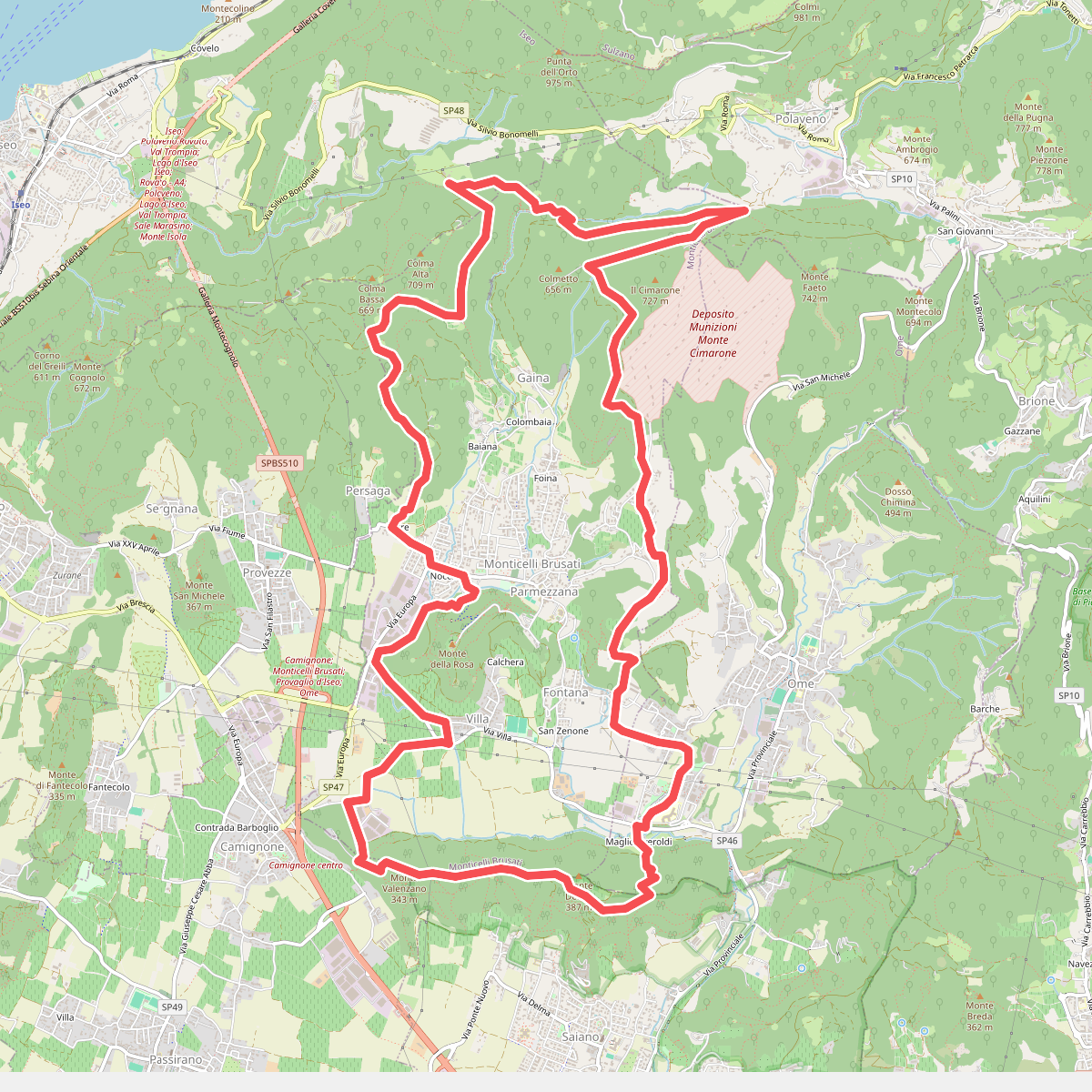
#8. El gir del Muntasel
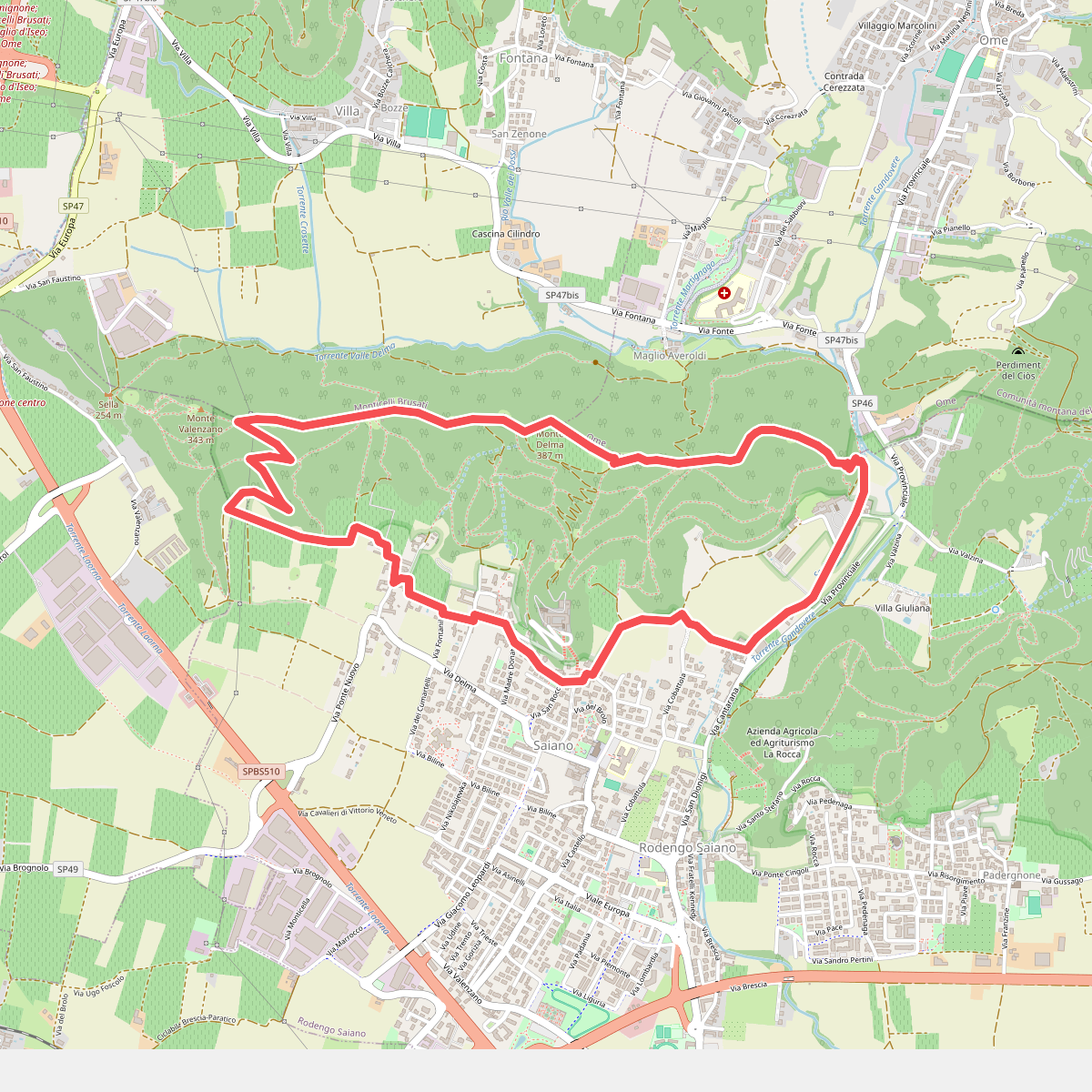
#9. Giro del Monte Delma
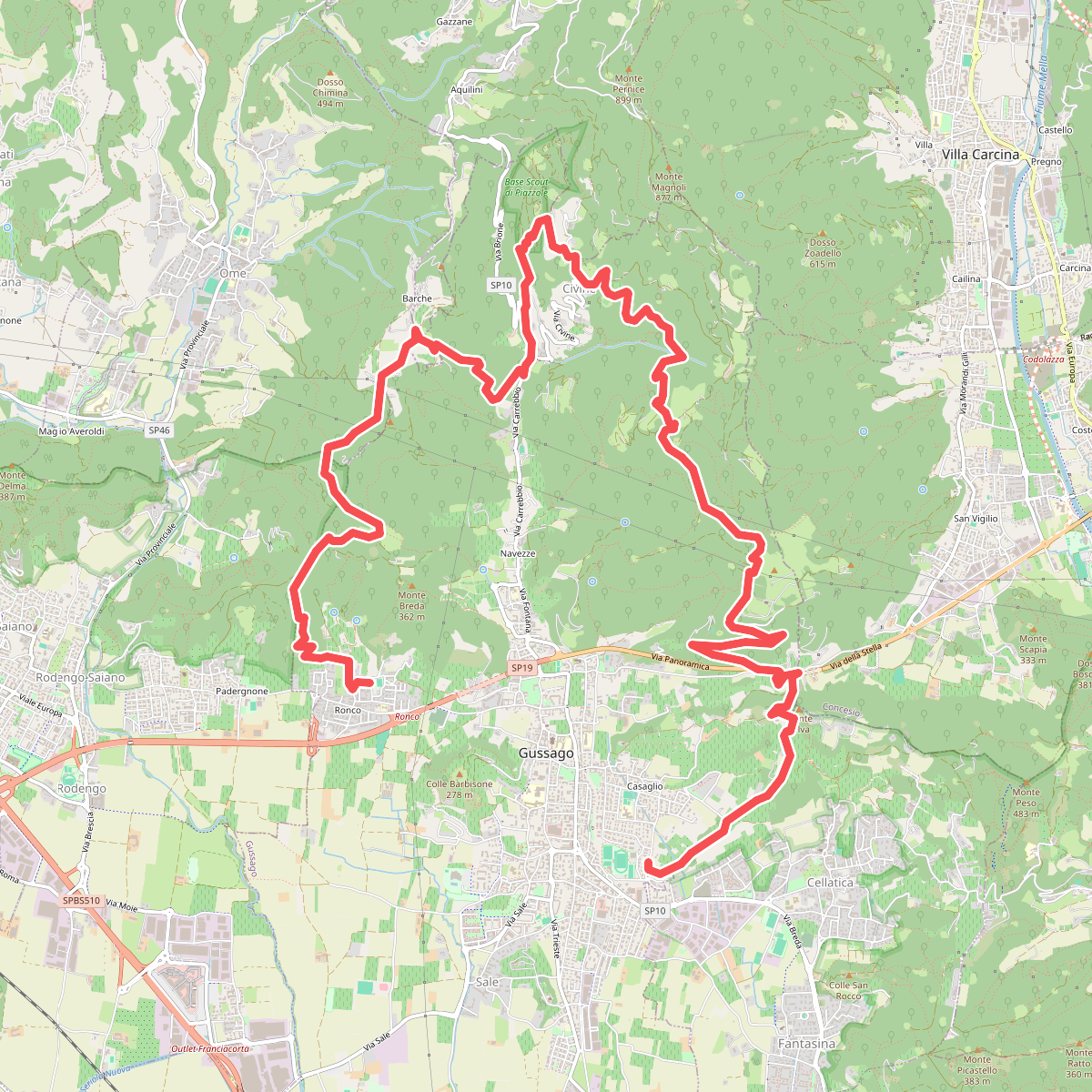
#10. Giro delle Colline
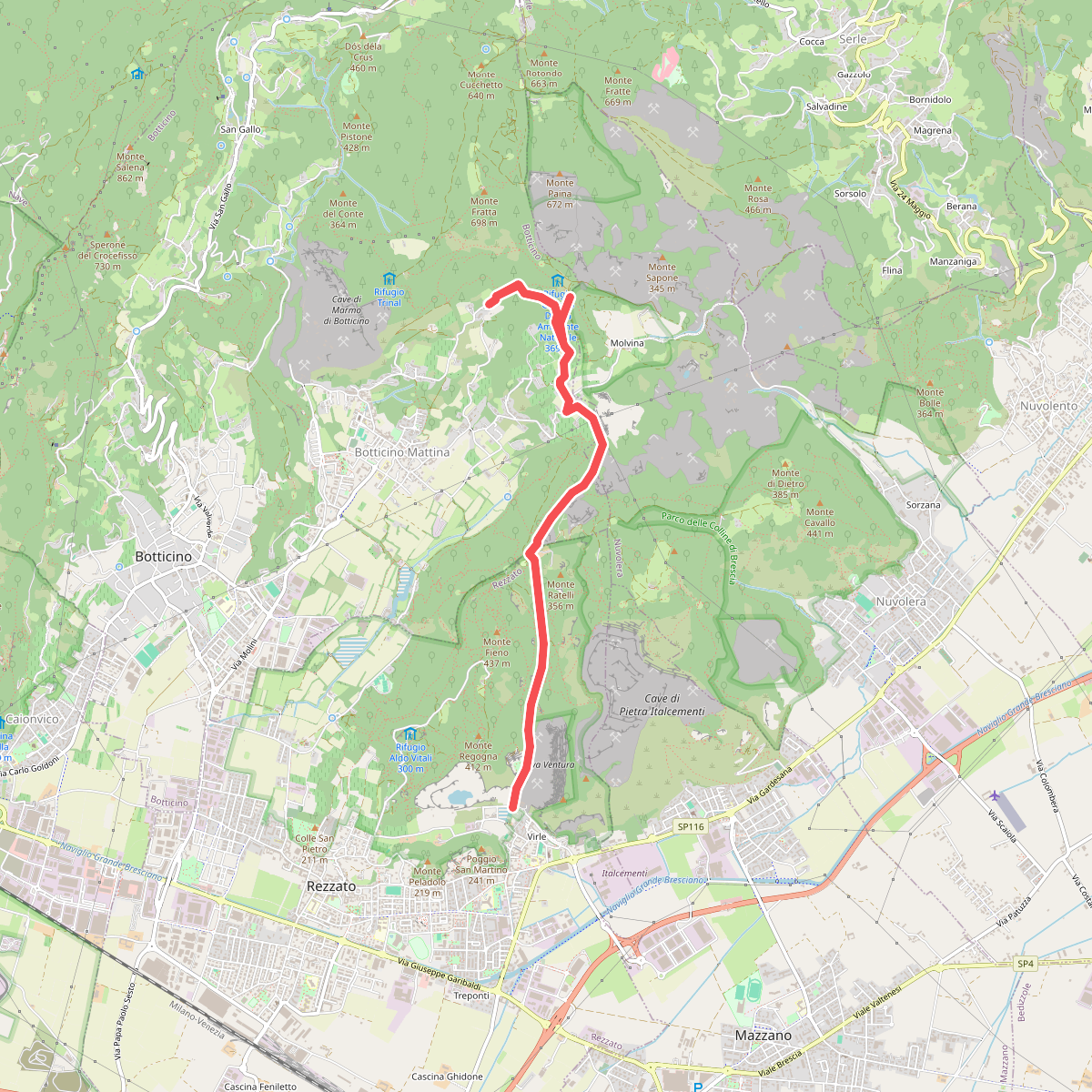
#11. La Via del marmo - Rezzato (Valle di Virle)