

The best hiking routes in Alpe della Luna - Bocca Trabaria
Discover the best walks in Alpe della Luna - Bocca Trabaria. 8 routes on the map, with descriptions, photos and GPX.
Managed by UM Alta Valle del Metauro
About Alpe della Luna - Bocca Trabaria
Alpe della Luna - Bocca Trabaria covers a densely forested section of the northern Apennines, where the landscape is defined by steep sandstone ridges and deep, shaded ravines rather than open alpine meadows. The canopy consists almost entirely of mature beech trees, which create a dark forest floor with limited undergrowth. Unlike the flatter clay paths of the lower valleys, the walking routes here follow narrow, stony ridges and old charcoal burners' tracks, where exposed sandstone slabs and loose shale require careful footing.
Read more
About Alpe della Luna - Bocca Trabaria
Alpe della Luna - Bocca Trabaria covers a densely forested section of the northern Apennines, where the landscape is defined by steep sandstone ridges and deep, shaded ravines rather than open alpine meadows. The canopy consists almost entirely of mature beech trees, which create a dark forest floor with limited undergrowth. Unlike the flatter clay paths of the lower valleys, the walking routes here follow narrow, stony ridges and old charcoal burners' tracks, where exposed sandstone slabs and loose shale require careful footing.
Read moreAlpe della Luna - Bocca Trabaria covers a densely forested section of the northern Apennines, where the landscape is defined by steep sandstone ridges and deep, shaded ravines rather than open alpine meadows. The canopy consists almost entirely of mature beech trees, which create a dark forest floor with limited undergrowth. Unlike the flatter clay paths of the lower valleys, the walking routes here follow narrow, stony ridges and old charcoal burners' tracks, where exposed sandstone slabs and loose shale require careful footing.
Walking through this reserve reveals a history of traditional forestry. You will frequently pass flat, circular clearings in the woods, which are the remains of historical charcoal kilns, and the forest itself is characterized by even-aged stands of beech recovering from past logging. Water is a constant presence on the lower slopes, where small streams cut through the clay and sandstone layers, creating damp, mossy microclimates that contrast sharply with the dry, wind-exposed ridge lines.
This area is suited for those who prefer enclosed woodland walking over wide panoramic views. The dense tree cover remains thick until late autumn, when the beech leaves turn copper and drop, briefly opening up views of the surrounding ridges before winter. The paths are mostly earthen tracks and rocky mule trails, with no boardwalks or paved sections, offering a consistent forest experience that feels remote despite the proximity of the mountain pass road.
Hiking routes in Alpe della Luna - Bocca Trabaria (8)
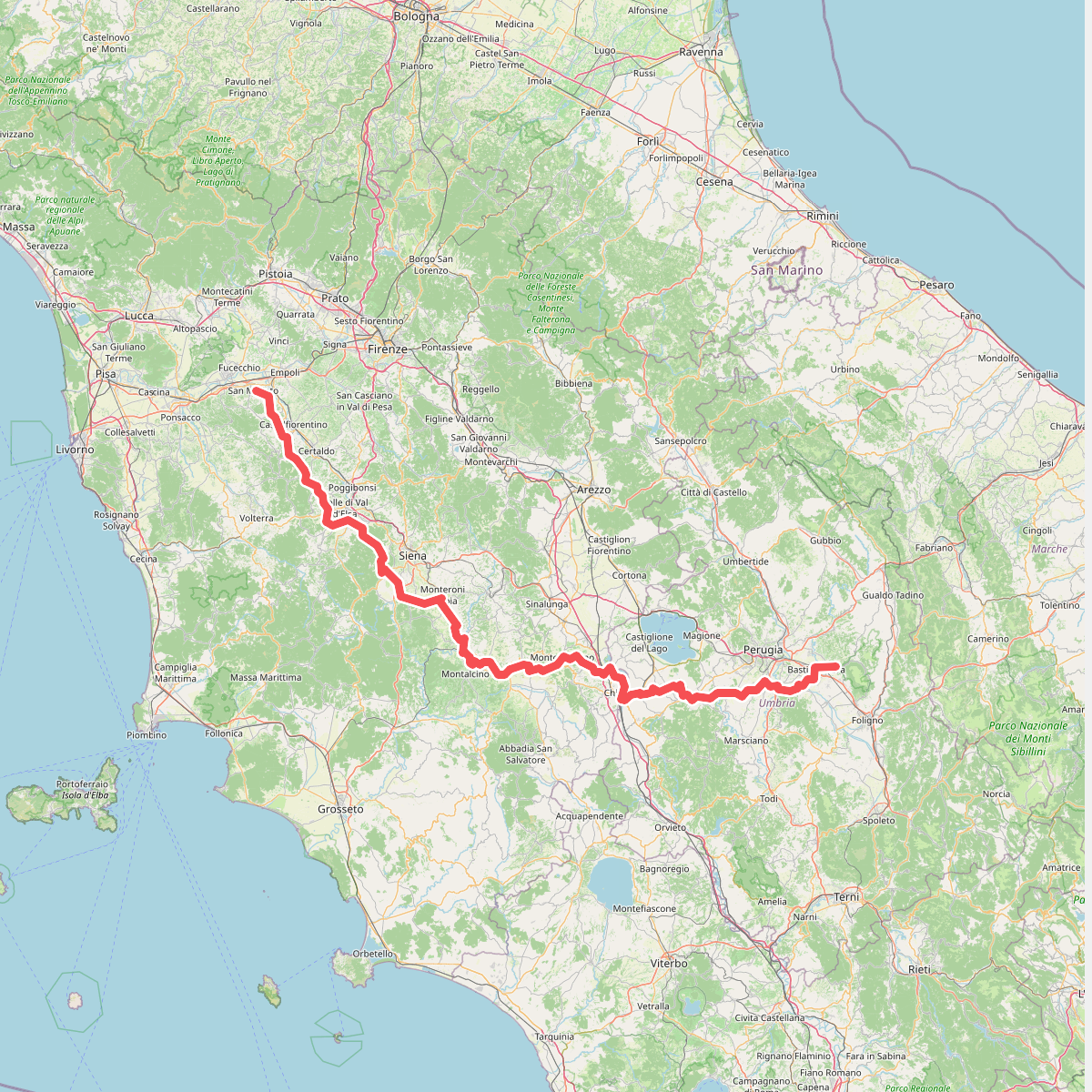
#1. Cammino d'Assisi, San Miniato - Assisi

#2. E1 Toscana 22 Passo di Viamaggio - Passo di Bocca Trabaria

#3. Grande Escursione Appenninica - Tappa 1

#4. Sentiero 00
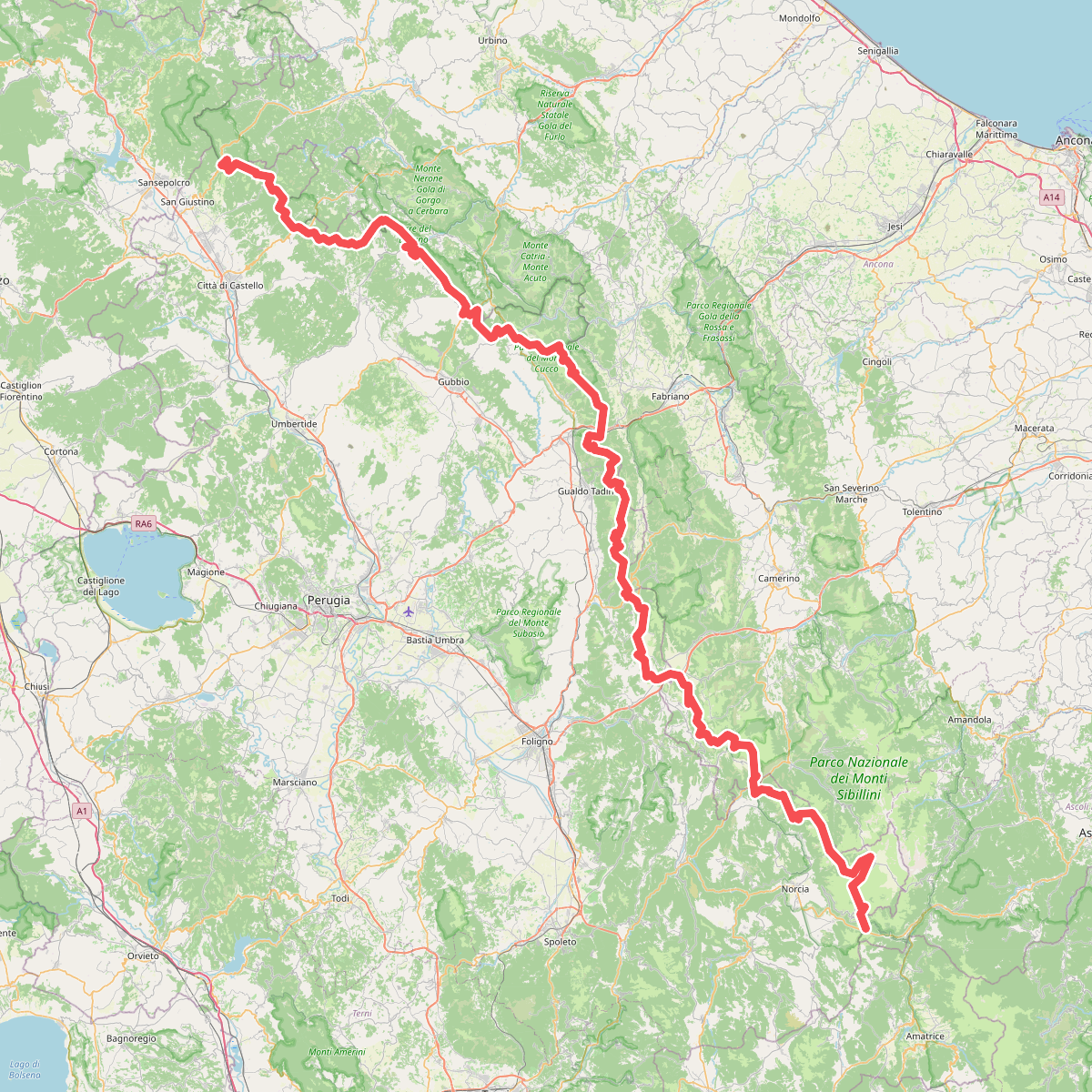
#5. Sentiero europeo E1, Italia - Umbria/Marche

#6. Sentiero Italia · SI

#7. Sentiero Italia - Umbria/Marche N00 · SI