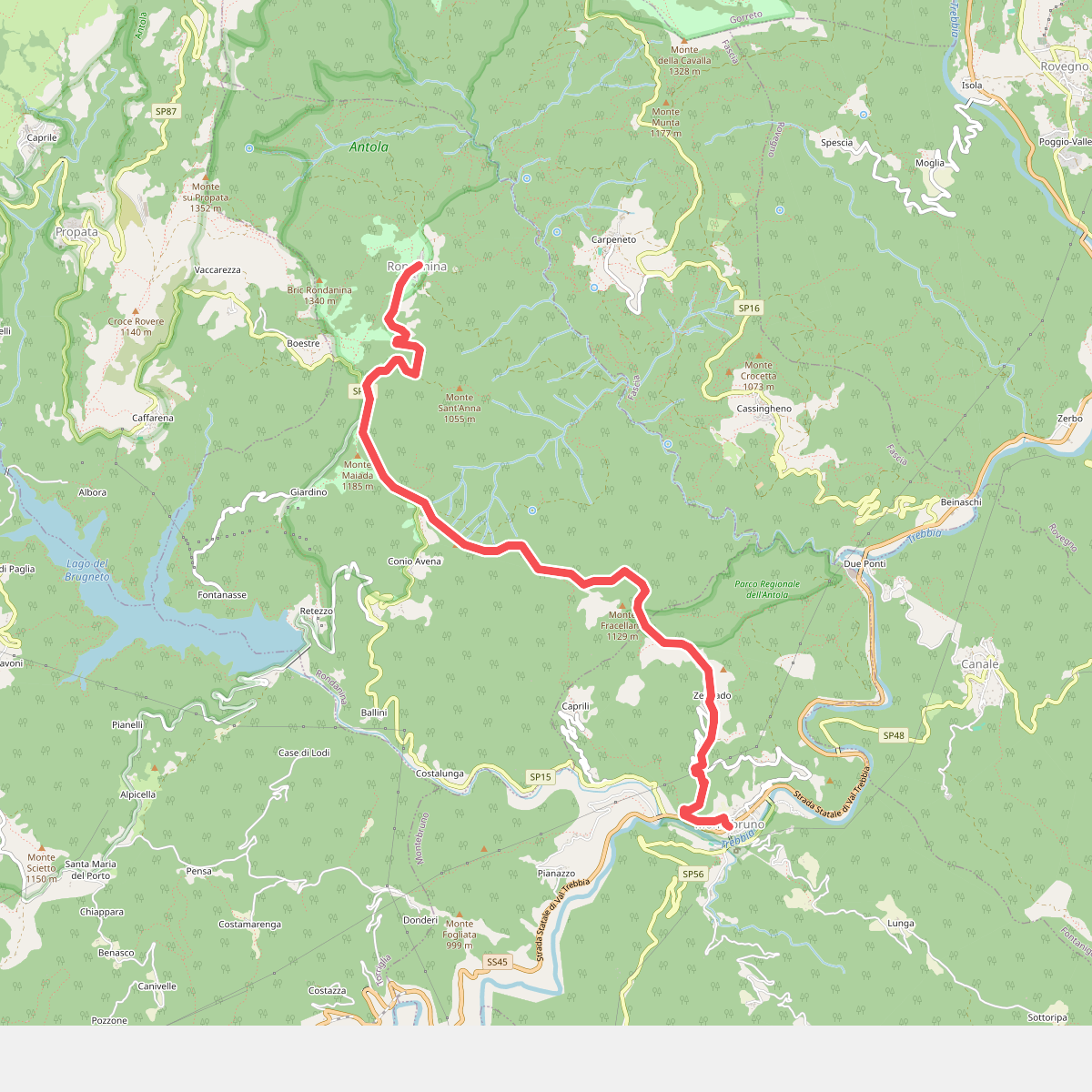
The best hiking routes in Antola
Discover the best walks in Antola. 5 routes on the map, with descriptions, photos and GPX.
About Antola
Antola offers a distinct walking landscape in the Ligurian Apennines, characterized by high-altitude pastures, dense beech forests, and limestone outcrops rather than the rugged, jagged peaks found in higher mountain ranges. Walkers here will navigate a transition from shaded woodland paths, where the ground is thick with leaf litter and exposed roots, to open, grassy ridges. The terrain is defined by its rounded summits and wide, sloping meadows that serve as active grazing lands, meaning you will frequently encounter cattle and horses along the trails.
Read more
About Antola
Antola offers a distinct walking landscape in the Ligurian Apennines, characterized by high-altitude pastures, dense beech forests, and limestone outcrops rather than the rugged, jagged peaks found in higher mountain ranges. Walkers here will navigate a transition from shaded woodland paths, where the ground is thick with leaf litter and exposed roots, to open, grassy ridges. The terrain is defined by its rounded summits and wide, sloping meadows that serve as active grazing lands, meaning you will frequently encounter cattle and horses along the trails.
Read moreAntola offers a distinct walking landscape in the Ligurian Apennines, characterized by high-altitude pastures, dense beech forests, and limestone outcrops rather than the rugged, jagged peaks found in higher mountain ranges. Walkers here will navigate a transition from shaded woodland paths, where the ground is thick with leaf litter and exposed roots, to open, grassy ridges. The terrain is defined by its rounded summits and wide, sloping meadows that serve as active grazing lands, meaning you will frequently encounter cattle and horses along the trails.
Underfoot, the paths consist of a mix of packed earth, loose limestone scree, and stony mule tracks that require stable footing. In late spring, particularly around May, these open ridges are notable for the sudden flowering of wild narcissi and lilies, which briefly transforms the otherwise green pastures. The area is generally quieter than the nearby coastal paths, though the main route leading to the summit of Monte Antola attracts more local walkers during weekends.
This is a landscape shaped by centuries of traditional pastoral farming and forestry, visible in the old stone ruins and terraced slopes that cut through the lower valleys. It is not a place for technical climbing, but rather for long, steady ascents through changing vegetation zones. Walkers should expect sustained climbs on clear, marked paths that wind through the trees before opening up to the grassy, wind-swept shoulders of the main ridge.