

The best hiking routes in Boschi di Ferretto - Bagnolo
Discover the best walks in Boschi di Ferretto - Bagnolo. 7 routes on the map, with descriptions, photos and GPX.
About Boschi di Ferretto - Bagnolo
Boschi di Ferretto - Bagnolo preserves a rare fragment of the ancient lowland deciduous forests and heathlands that once covered this part of the Italian countryside. Unlike the typical cultivated fields and olive groves of the surrounding region, this nature reserve is characterized by a dense cover of downy oak woods interspersed with open patches of acid-loving shrubs and mosses. The terrain is flat and low-lying, offering a closed-in, intimate woodland experience rather than wide-open panoramic views.
Read more
About Boschi di Ferretto - Bagnolo
Boschi di Ferretto - Bagnolo preserves a rare fragment of the ancient lowland deciduous forests and heathlands that once covered this part of the Italian countryside. Unlike the typical cultivated fields and olive groves of the surrounding region, this nature reserve is characterized by a dense cover of downy oak woods interspersed with open patches of acid-loving shrubs and mosses. The terrain is flat and low-lying, offering a closed-in, intimate woodland experience rather than wide-open panoramic views.
Read moreBoschi di Ferretto - Bagnolo preserves a rare fragment of the ancient lowland deciduous forests and heathlands that once covered this part of the Italian countryside. Unlike the typical cultivated fields and olive groves of the surrounding region, this nature reserve is characterized by a dense cover of downy oak woods interspersed with open patches of acid-loving shrubs and mosses. The terrain is flat and low-lying, offering a closed-in, intimate woodland experience rather than wide-open panoramic views.
Underfoot, walkers will find a mix of packed dirt paths and sandy tracks that cut through the thick undergrowth. In the open clearings, the soil supports extensive carpets of heather and rare bryophytes, which give the ground a soft, spongy texture off the main trails. The transition between the shady oak canopy and these sun-exposed heathland clearings is sharp, creating distinct microclimates that you can feel as you move through the reserve.
This area is not a destination for hill climbing or dramatic vistas, as the landscape remains consistently level. Instead, it appeals to those interested in botanical variety and quiet, observant walking. In late summer, particularly around August, the dry heath sections show their characteristic purple blooms, making it the best time to notice the stark contrast between the arid sandy openings and the damp, shaded forest floor.
Hiking routes in Boschi di Ferretto - Bagnolo (7)
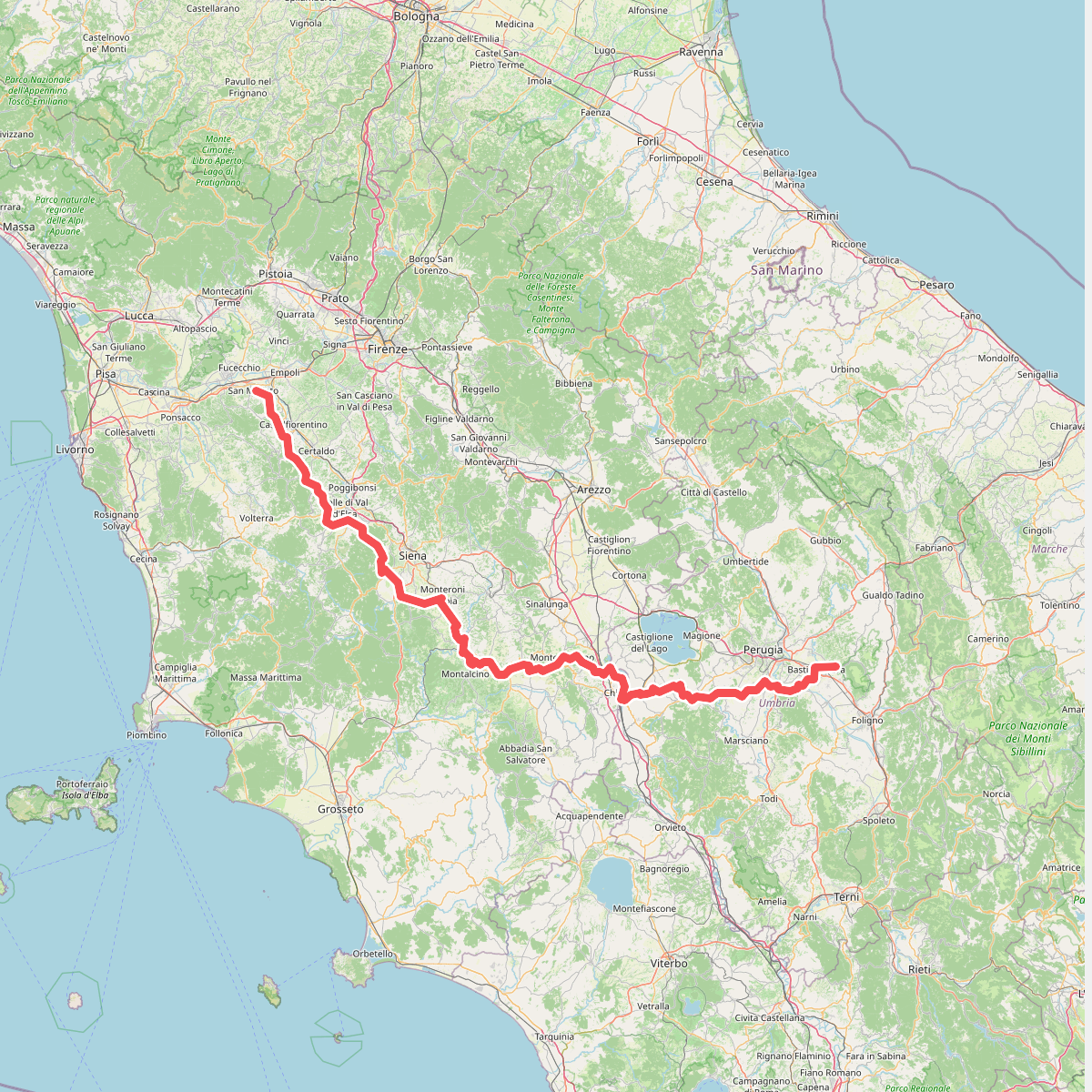
#1. Cammino d'Assisi, San Miniato - Assisi

#2. La Via del Trasimeno Tappa 5

#3. La Via del Trasimeno Tappa 6

#4. Sentiero della Bonifica

#5. Via Lauretana Toscana

#6. Via Romea - Tratto Toscana