The best hiking routes in Deisenhofener Forst
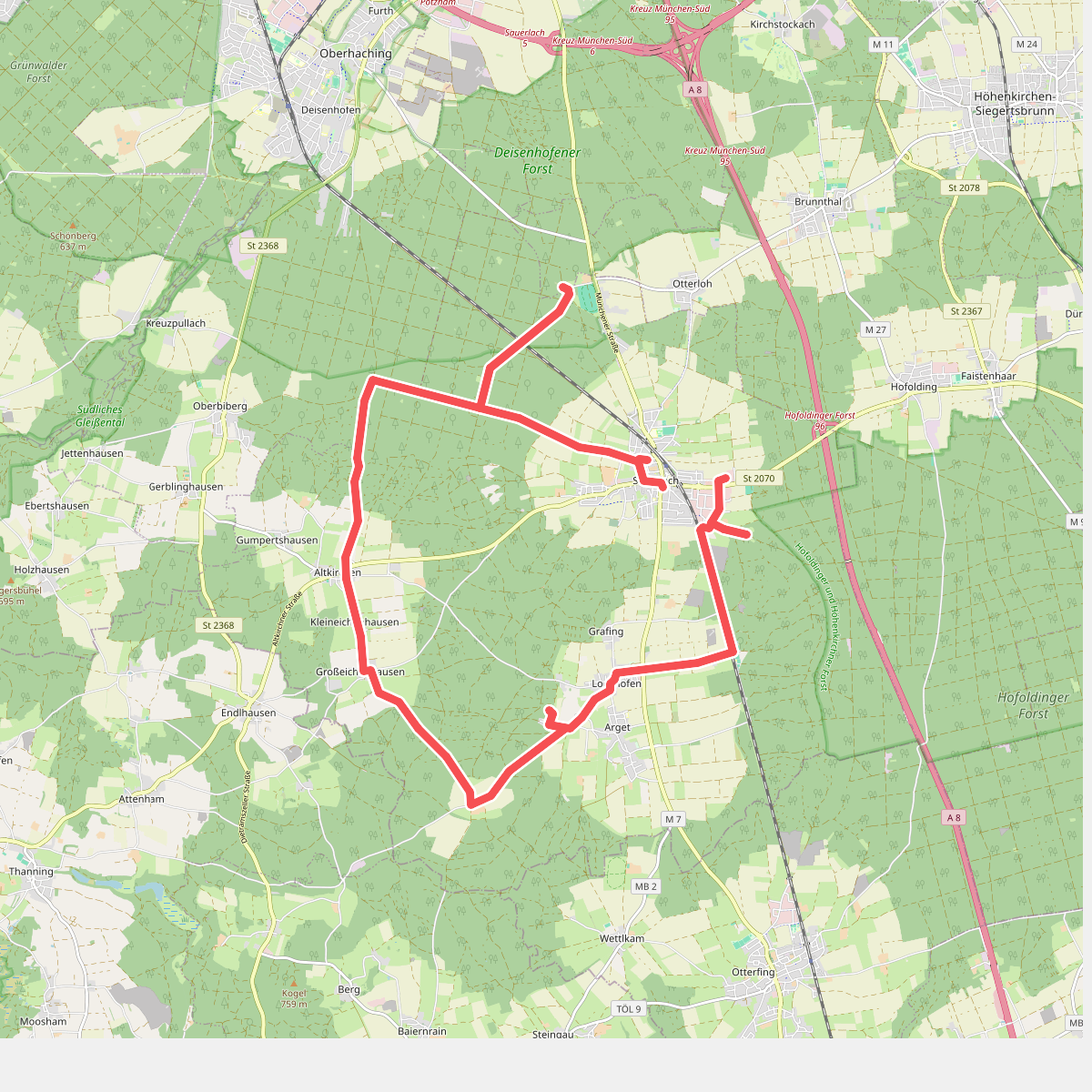
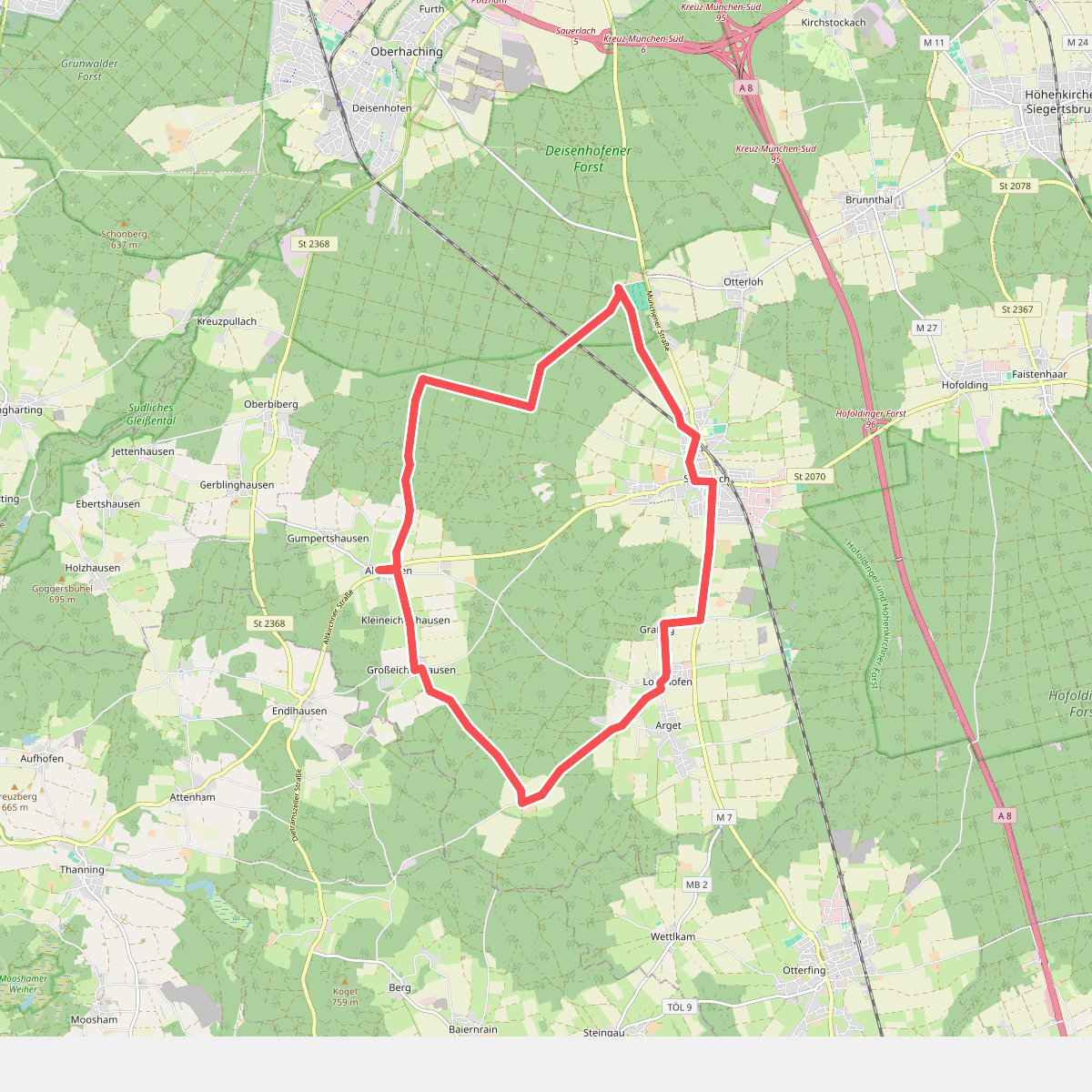
Discover the best walks in Deisenhofener Forst. 2 routes on the map, with descriptions, photos and GPX.
About Deisenhofener Forst
Deisenhofener Forst is a managed gravel-plain forest south of Munich, dominated by tall, straight-growing spruce and pine plantations. Unlike the nearby alpine foothills, this terrain is almost entirely flat, offering no sweeping vistas or dramatic elevation changes. The landscape is defined by a highly structured grid of wide, gravel forestry tracks that are easy to navigate but can feel monotonous. Interspersed among the conifers are pockets of mixed beech and oak, which show their first green leaves in May, breaking up the dark canopy.
Read more
About Deisenhofener Forst
Deisenhofener Forst is a managed gravel-plain forest south of Munich, dominated by tall, straight-growing spruce and pine plantations. Unlike the nearby alpine foothills, this terrain is almost entirely flat, offering no sweeping vistas or dramatic elevation changes. The landscape is defined by a highly structured grid of wide, gravel forestry tracks that are easy to navigate but can feel monotonous. Interspersed among the conifers are pockets of mixed beech and oak, which show their first green leaves in May, breaking up the dark canopy.
Read moreDeisenhofener Forst is a managed gravel-plain forest south of Munich, dominated by tall, straight-growing spruce and pine plantations. Unlike the nearby alpine foothills, this terrain is almost entirely flat, offering no sweeping vistas or dramatic elevation changes. The landscape is defined by a highly structured grid of wide, gravel forestry tracks that are easy to navigate but can feel monotonous. Interspersed among the conifers are pockets of mixed beech and oak, which show their first green leaves in May, breaking up the dark canopy.
Underfoot, you will mostly walk on firm, compacted gravel and forest soil. Because the area sits on a thick layer of glacial gravel, rainwater drains away quickly, meaning you will rarely encounter deep mud or standing water even after heavy rainfall. The straight, intersecting paths are popular with local cyclists and runners, but the sheer size of the forest means the deeper sections away from the trailheads remain quiet.
This is a working forest where timber harvesting is a regular occurrence. You will notice piles of logged timber stacked along the trailside and occasional wide clearings where the canopy has been opened up. It is a practical, peaceful green space for straightforward walking rather than a wild, varied nature reserve.