The best hiking routes in Humedal de Ajauque y Rambla Salada
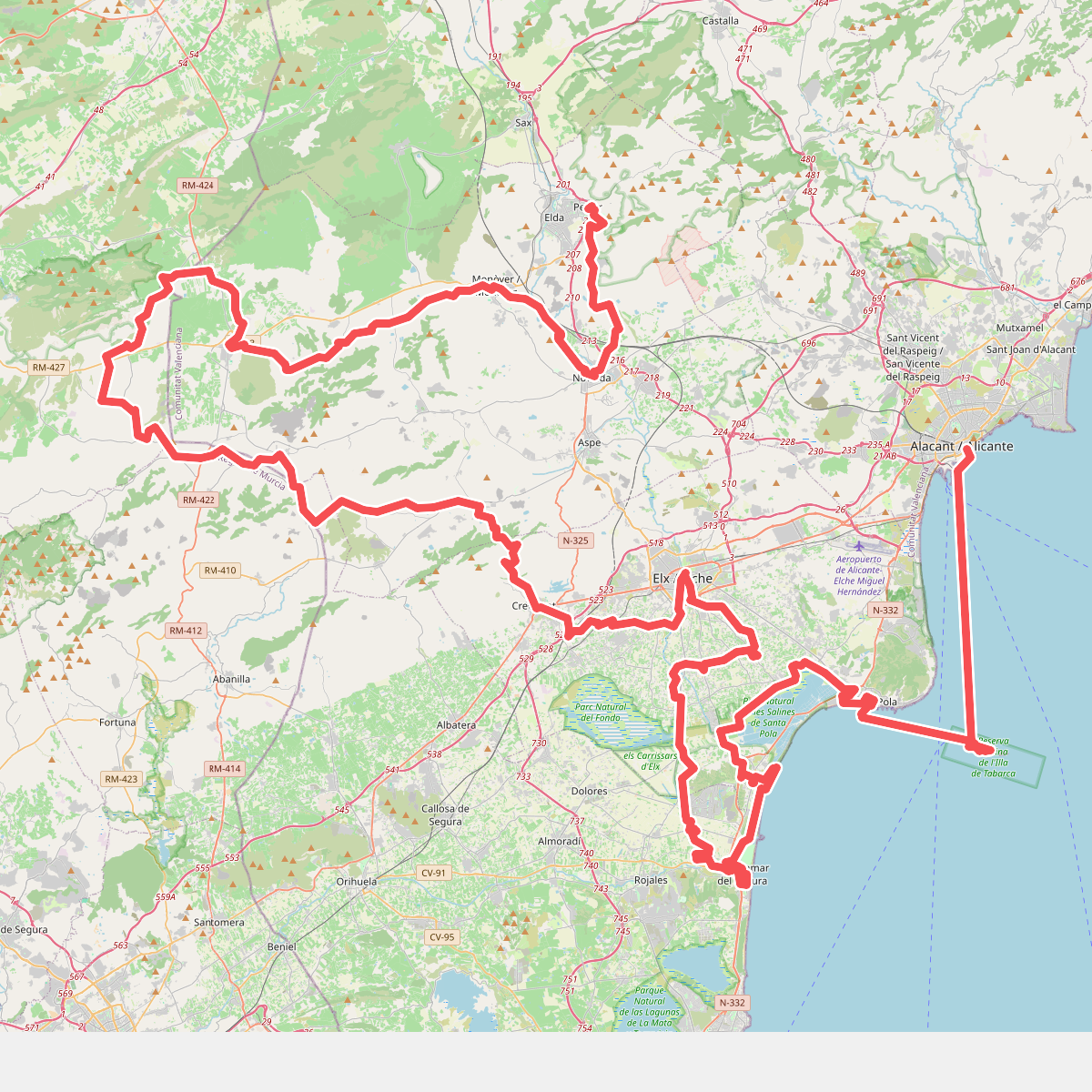
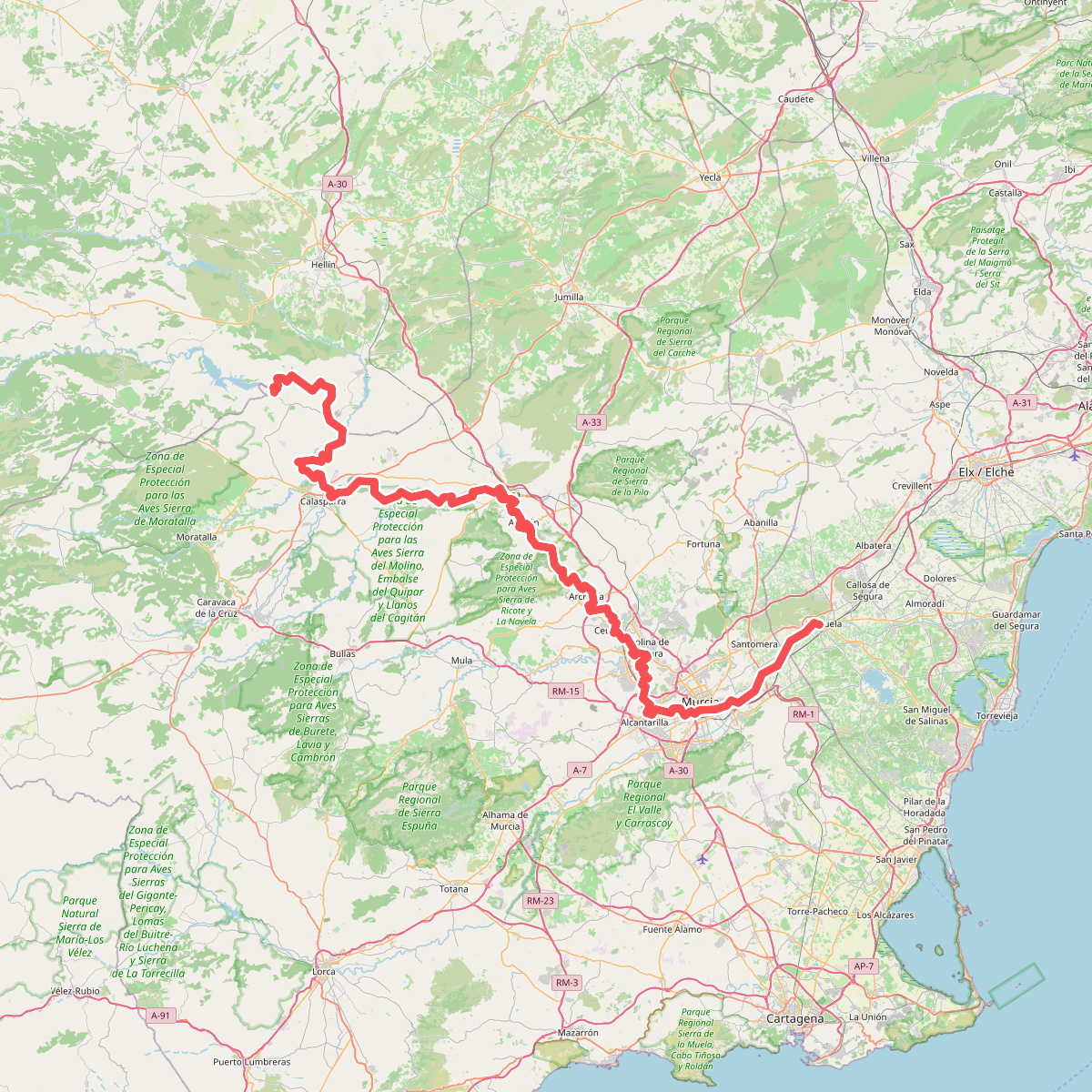
Discover the best walks in Humedal de Ajauque y Rambla Salada. 2 routes on the map, with descriptions, photos and GPX.
Managed by Dirección General de Medio Natural. Consejería de Agua, Agricultura, Ganadería, Pesca y Medio Ambiente. Comunidad Autónoma de la Región de Murcia
About Humedal de Ajauque y Rambla Salada
Humedal de Ajauque y Rambla Salada is a protected wetland in Spain defined by its highly saline, arid environment. Unlike typical freshwater wetlands, this landscape is shaped by hypersaline streams and seasonal watercourses known as ramblas. The terrain is flat and open, characterized by salt crusts on the soil surface and specialized halophytic vegetation, such as glasswort and saltwort, which thrive in these harsh conditions.
Read more
About Humedal de Ajauque y Rambla Salada
Humedal de Ajauque y Rambla Salada is a protected wetland in Spain defined by its highly saline, arid environment. Unlike typical freshwater wetlands, this landscape is shaped by hypersaline streams and seasonal watercourses known as ramblas. The terrain is flat and open, characterized by salt crusts on the soil surface and specialized halophytic vegetation, such as glasswort and saltwort, which thrive in these harsh conditions.
Read moreHumedal de Ajauque y Rambla Salada is a protected wetland in Spain defined by its highly saline, arid environment. Unlike typical freshwater wetlands, this landscape is shaped by hypersaline streams and seasonal watercourses known as ramblas. The terrain is flat and open, characterized by salt crusts on the soil surface and specialized halophytic vegetation, such as glasswort and saltwort, which thrive in these harsh conditions.
Walkers will find a stark contrast between the dry, dusty clay paths of the surrounding badlands and the damp, reed-lined margins of the water channels. The underfoot conditions alternate between hard-packed earth, loose silt, and occasional muddy patches near the water. There are no high peaks or shaded forests here; the landscape is low-lying and exposed, with the salt-tolerant scrub providing the only ground cover.
In late autumn, particularly around November, the water levels in the ramblas are more stable, making the salt-crusted banks and the contrast with the dry clay hills particularly visible. The area is generally quiet, though the designated bird-watching points can attract more visitors during migratory periods. This reserve is best suited for those interested in specialized desert-like ecosystems rather than traditional green pastures or wooded trails.