

The best hiking routes in Пирин
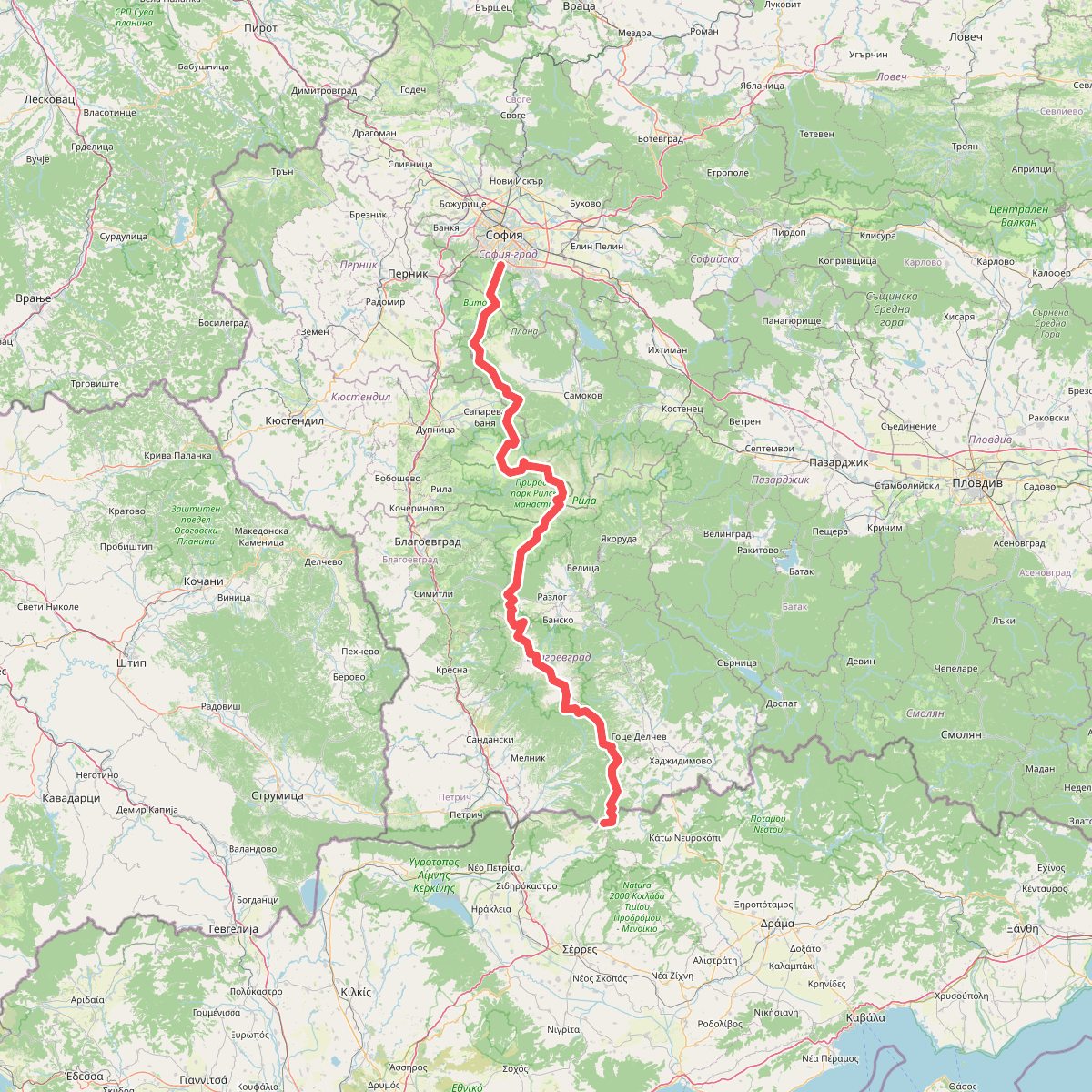
Discover the best walks in Пирин. 1 routes on the map, with descriptions, photos and GPX.
About Пирин
Пирин is a high-altitude alpine landscape dominated by sharp marble and granite ridges, glacial lakes, and deep cirques. Unlike gentler forested hills, this terrain is defined by steep, rocky slopes and vast scree fields that require careful footwork. The lower valleys feature dense forests of Bosnian and Macedonian pines, which gradually give way to dwarf pine scrub and bare rock as you ascend. Underfoot, the paths transition from soft pine needle loam to loose granite scree and solid rock slabs where trail markers are painted directly onto the stone.
Read more
About Пирин
Пирин is a high-altitude alpine landscape dominated by sharp marble and granite ridges, glacial lakes, and deep cirques. Unlike gentler forested hills, this terrain is defined by steep, rocky slopes and vast scree fields that require careful footwork. The lower valleys feature dense forests of Bosnian and Macedonian pines, which gradually give way to dwarf pine scrub and bare rock as you ascend. Underfoot, the paths transition from soft pine needle loam to loose granite scree and solid rock slabs where trail markers are painted directly onto the stone.
Read moreПирин is a high-altitude alpine landscape dominated by sharp marble and granite ridges, glacial lakes, and deep cirques. Unlike gentler forested hills, this terrain is defined by steep, rocky slopes and vast scree fields that require careful footwork. The lower valleys feature dense forests of Bosnian and Macedonian pines, which gradually give way to dwarf pine scrub and bare rock as you ascend. Underfoot, the paths transition from soft pine needle loam to loose granite scree and solid rock slabs where trail markers are painted directly onto the stone.
Water is a constant presence in the landscape, visible as chains of blue glacial tarns nested in the cirques rather than wide rivers or marshy bogs. The limestone and marble sections in the northern part of the range support distinct alpine flora, including the rare edelweiss, which clings to the sheer rock faces. In contrast, the southern granite areas are characterised by rugged peaks and boulder-strewn basins that hold snow patches well into July.
This is a demanding environment where hikers must navigate steep gradients and exposed ridges. There are no gentle rolling meadows or sandy woodland tracks here. Instead, the routes consist of rugged mountain paths, steep stone steps, and occasional scrambles over large boulders. The main trailheads are accessible by asphalt roads, but once you ascend past the tree line, the terrain becomes a stark, high-alpine world of stone and water.