

The best hiking routes in South Downs National Park
Discover the best walks in South Downs National Park. 5 routes on the map, with descriptions, photos and GPX.
About South Downs National Park
The South Downs National Park is defined by its massive chalk ridge, which rises gently from the northern weald and drops abruptly in steep, north-facing escarpments. Walking here means navigating a landscape of open, rolling chalk grassland, deep dry valleys, and extensive beech hangers. Underfoot, the paths are predominantly hard-packed chalk, which can become slippery when wet, interspersed with flint gravel and clay-with-flints on the higher ridges. The vegetation is low and wind-sheared, dominated by fine grasses, wild herbs, and gorse scrub, offering wide views over the surrounding lowlands.
Read more
About South Downs National Park
The South Downs National Park is defined by its massive chalk ridge, which rises gently from the northern weald and drops abruptly in steep, north-facing escarpments. Walking here means navigating a landscape of open, rolling chalk grassland, deep dry valleys, and extensive beech hangers. Underfoot, the paths are predominantly hard-packed chalk, which can become slippery when wet, interspersed with flint gravel and clay-with-flints on the higher ridges. The vegetation is low and wind-sheared, dominated by fine grasses, wild herbs, and gorse scrub, offering wide views over the surrounding lowlands.
Read moreThe South Downs National Park is defined by its massive chalk ridge, which rises gently from the northern weald and drops abruptly in steep, north-facing escarpments. Walking here means navigating a landscape of open, rolling chalk grassland, deep dry valleys, and extensive beech hangers. Underfoot, the paths are predominantly hard-packed chalk, which can become slippery when wet, interspersed with flint gravel and clay-with-flints on the higher ridges. The vegetation is low and wind-sheared, dominated by fine grasses, wild herbs, and gorse scrub, offering wide views over the surrounding lowlands.
Further east, the chalk meets the English Channel, creating the sheer white cliffs of the Seven Sisters and Beachy Head. Here, the terrain transitions into coastal grazing marshes and river estuaries, where the paths follow grassy embankments and shingle beaches. In contrast, the western section of the park features the Western Weald, where the chalk gives way to greensand and clay. This area offers a different walking experience, characterized by sunken lanes cut deep into the sandstone, sandy tracks, and dense pine and oak woodlands.
This landscape is heavily shaped by centuries of sheep grazing, which prevents scrub from taking over the chalk grassland and maintains the short, springy turf. In May and June, the chalk slopes are notable for their variety of wild orchids and butterflies, which thrive in this specific habitat. While the South Downs lacks rugged peaks or deep mountain gorges, it offers a continuous, undulating trail network where walkers can expect steady climbs and descents rather than flat terrain.
Hiking routes in South Downs National Park (5)

#1. 1066 Country Walk - South Downs Link
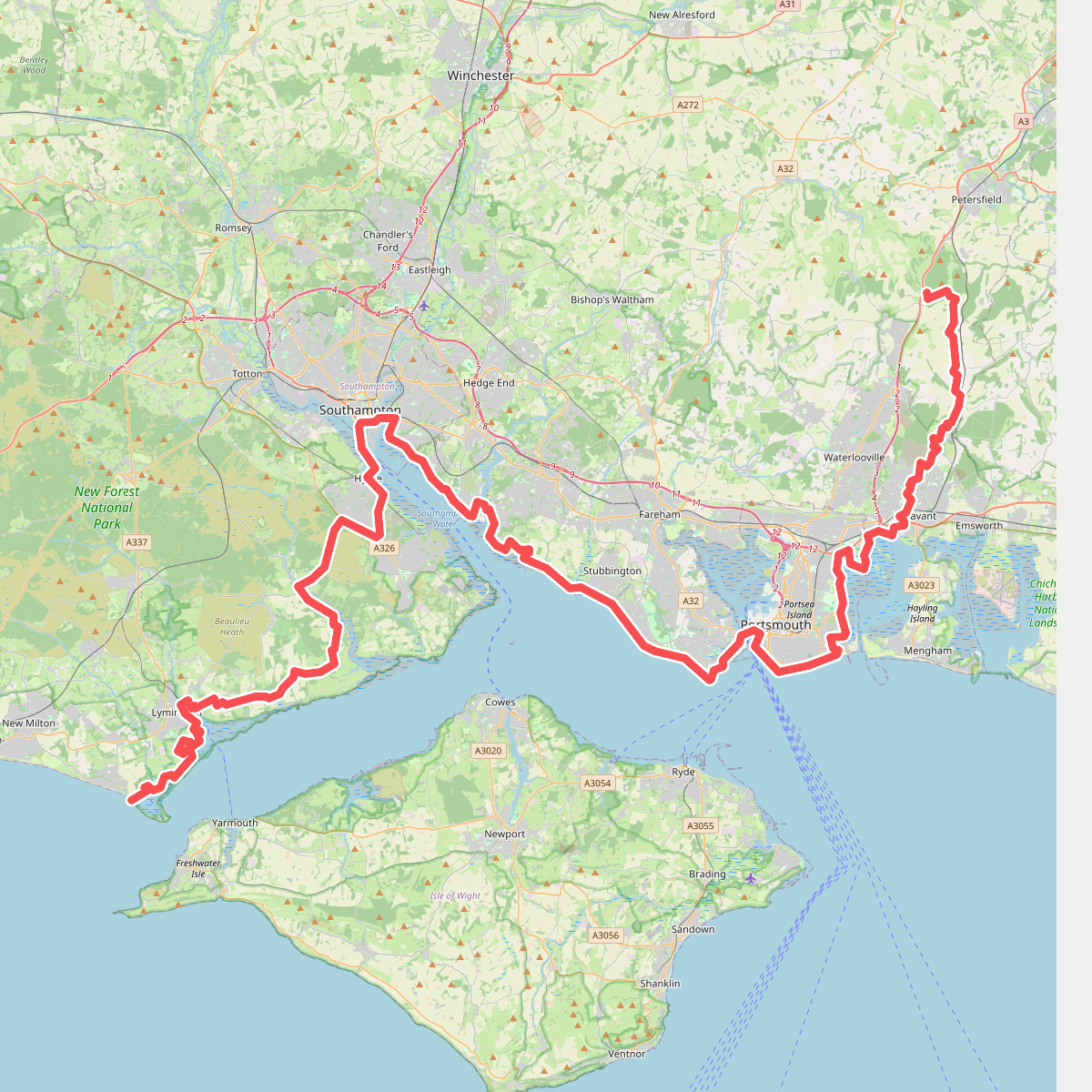
#2. European walking route E9, Milford on Sea to Queen Elizabeth Country Park

#3. European walking route E9, Queen Elizabeth Country Park to Jevington
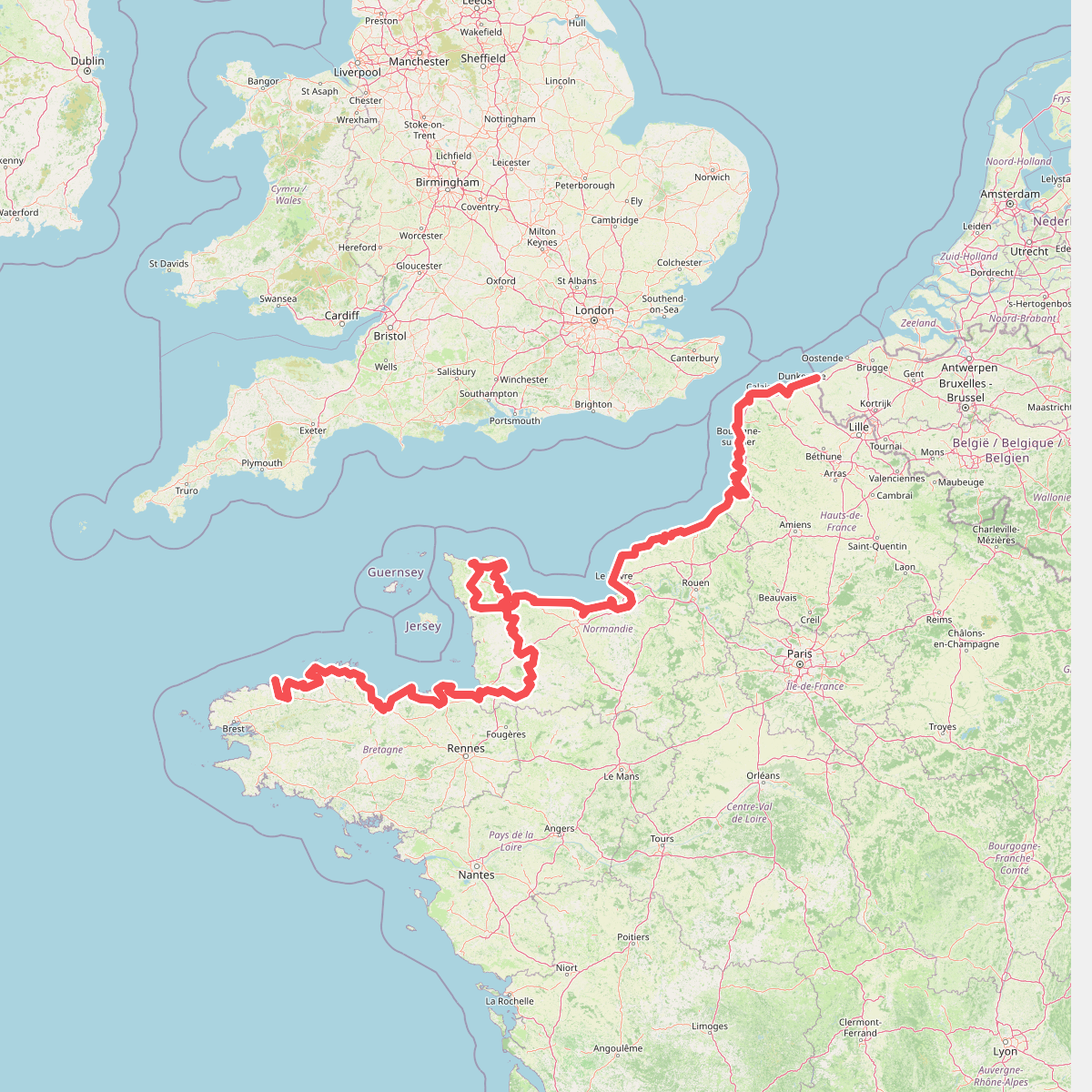
#4. Eurovelo 4
Roscoff,Saint-Pol-de-Léon,Plouénan,Taulé,Saint-Martin-des-Champs,Morlaix,Plouezoc'h,Plougasnou,Saint-Jean-du-Doigt,Guimaëc,Locquirec,Plestin-les-Grèves,Saint-Michel-en-Grève,Ploumilliau,Ploubezre,Lannion,Trébeurden,Pleumeur-Bodou,Trégastel,Perros-Guirec,Louannec,Camlez,Penvénan,Plouguiel,Trédarzec,Pleumeur-Gautier,Lézardrieux,Paimpol,Plouézec,Plouha,Tréveneuc,Binic-Étables-sur-Mer,Pordic,Plérin,Saint-Brieuc,Langueux,Hillion,Lamballe-Armor,Pléneuf-Val-André,Erquy,Fréhel,Plévenon,Pléboulle,Matignon,Saint-Cast-le-Guildo,Beaussais-sur-Mer,Tréméreuc,Plouër-sur-Rance,Saint-Suliac,Saint-Père-Marc-en-Poulet,Saint-Malo,Saint-Coulomb,Cancale,Saint-Méloir-des-Ondes,Hirel,Cherrueix,France métropolitaine,Roz-sur-Couesnon,Pontorson,Courtils,Céaux,Poilley,Ducey-les-Chéris,Isigny-le-Buat,Grandparigny,Romagny Fontenay,Saint-Clément-Rancoudray,Sourdeval,Vire Normandie,Souleuvre-en-Bocage,Pont-Bellanger,Tessy-Bocage,Fourneaux,Condé-sur-Vire,Bourgvallées,Saint-Lô,Agneaux,Pont-Hébert,Airel